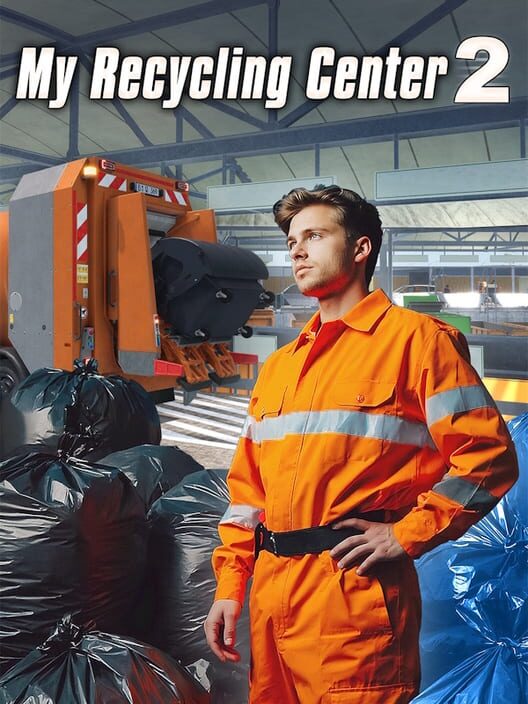
My Recycling Center 2
My Recycling Center 2 Beginner Guide: Run a Better Yard
Learn the essential priorities in My Recycling Center 2, from sorting incoming waste and avoiding queues to upgrades, maintenance, and municipal routes.
Price Comparison
My Recycling Center 2 is a first-person recycling-yard simulator built around a simple but demanding priority: process incoming waste fast enough to keep customers moving while building a facility that can handle more work. For a strong start, focus on a clear unloading and sorting routine before spending heavily on expansion. Customers can arrive at the same time as your experience grows, and slow unloading can create a queue, so an organized yard and reliable equipment matter more than cosmetic changes early on.
The game asks you to unload, sort, and compact waste, while also giving you ways to expand the yard, configure containers, restore reusable goods, and eventually take on municipal trash routes. The best early-game approach is to treat every new feature as part of one operating loop: receive materials, put them in the correct place, process them efficiently, maintain the machinery, and reinvest the resulting cash and satisfaction into capacity.
Understand the Core Work Loop First
Your recycling center is not only a building game. The central work is hands-on: customers bring waste to the yard, and you must unload and sort it before it becomes a bottleneck. The game includes more than 400 waste items, covering categories such as waste paper, bulky waste, recyclables, and scrap metal. That variety makes a repeatable sorting routine more useful than trying to react to every item individually.
Begin each session by looking at the state of the yard before accepting a rush of work. Make sure containers have room, equipment is usable, and the path from unloading to storage is not obstructed by objects or poorly placed upgrades. The game lets you freely design the yard through its level editor, so layout decisions are part of the management challenge rather than a fixed map constraint.
Use a Consistent Sorting Order
When a customer arrives, prioritize completing that unloading job instead of scattering attention across several partially handled loads. A practical order is to identify the waste type, move it to its appropriate container or machine, then confirm that the unloading area is ready for the next customer. This limits clutter around the arrival point and helps protect against queues once multiple customers begin appearing.
Try to keep waste types separated from the start. The game supports different containers and machines for different kinds of trash, and it allows players to buy, paint, and configure containers. Even when a more elaborate yard is possible later, a simple layout with unmistakable destinations will make day-to-day work faster and easier to manage.
Prevent Customer Queues Before They Start
Queue management is one of the clearest progression pressures in My Recycling Center 2. The official game description states that multiple customers can arrive simultaneously as experience increases, and they may form a queue when unloading is not completed quickly enough. In practice, this means early efficiency has a lasting value: a layout that works for one customer may fail when demand rises.
Keep the primary unloading zone as direct as possible. Place the containers and processing equipment you use most often close enough to reduce unnecessary movement, while leaving room for vehicles and incoming customers. Avoid treating every available space as storage. A crowded yard can look productive while making the actual unloading route slower.
When you earn enough to add capacity, prioritize improvements that reduce the cause of delays. Extra or better-positioned containers can be more valuable than a decorative redesign if your current arrangement forces you to carry waste across the yard. The XL recycling-center expansion adds a large roof and loading ramp for easier unloading, so it is a meaningful long-term facility goal for players whose current operation is constrained by throughput.
Build the Yard Around Workflow, Not Appearance
The level editor is one of the game's defining features. It allows you to design the yard, place upgrades, and arrange the space to suit your approach. Use that freedom deliberately. Create functional zones instead of placing every unlock wherever it fits at the moment.
Plan Three Working Areas
- Receiving area: Keep this open for customer unloading. It should be the least cluttered part of the yard because delays here directly affect queues.
- Processing area: Put containers and compactors in a predictable arrangement. Grouping related equipment reduces the time spent searching for the correct destination for an item.
- Resale and service area: Keep reusable goods, container cleaning, repainting, and other non-urgent work away from the main intake route. These activities can support earnings, but they should not prevent you from handling incoming waste.
This separation is especially useful once you begin mixing routine recycling work with restoration and municipal services. The objective is not to make the yard rigid. It is to make the next required action obvious whenever a customer or truck arrives.
Maintain Compactors and Do Not Ignore Wear
Compactors are important for handling bulky waste, but they require attention. My Recycling Center 2 states that compactors can wear out and stop working properly if they are not maintained. That makes equipment upkeep an operating requirement, not an optional late-game task.
Check the condition of compactors regularly, particularly before committing to a busy period or after processing a substantial amount of material. If a key compactor becomes unreliable when several customers are waiting, the delay can spread through the whole yard. Build the habit of inspecting the machines during calmer moments instead of waiting for a failure to interrupt an active unloading job.
Machine and container upgrades should be considered in relation to this maintenance burden. The game lets players purchase upgrades for both. An upgrade that improves a bottleneck you encounter repeatedly is generally a more useful early investment than one that does not affect your present workflow.
Turn Reusable Goods Into a Separate Revenue Stream
Not every incoming item needs to be treated as waste. My Recycling Center 2 includes an enlarged second-hand shop, where used goods such as furniture and electronics can be restored and sold rather than sent to the crusher. This creates a second track alongside disposal and recycling: identify an item with resale potential, restore it, then use the shop to convert it into value.
Keep this work separate from urgent customer processing. Restoring items is useful, but a customer queue can become the more immediate problem. Handle time-sensitive unloading first, then return to furniture, electronics, or other second-hand items when the intake area is under control.
The game also includes a pressure washer for cleaning containers and a paint gun for restoring worn paint jobs. These tools offer another way to keep equipment and containers in good condition. Use them as part of a maintenance pass when the yard is quiet, rather than interrupting a busy arrival period for non-essential cleaning.
Use Cash and Satisfaction With a Purpose
Cash and satisfaction are progression resources in My Recycling Center 2. They are used to unlock new trash types and containers, while cash can also support machine and container upgrades. This makes customer service and physical yard capacity connected: processing waste efficiently supports satisfaction, and progress unlocks more of the tools needed to deal with expanding work.
Spend with the next operational constraint in mind. If you are running out of places to put a particular waste type, a container-related purchase is likely more urgent than a broad redesign. If your unloading route is sound but processing takes too long, look at machine upgrades or changes to the compactor area. Keep enough flexibility in the budget to respond when the yard's workload changes.
Prepare for Municipal Services and Trash Routes
As you progress, My Recycling Center 2 lets you unlock municipal services and operate trash routes in an explorable city. These routes involve emptying bins with garbage trucks and dumping their contents at the waste-processing plant. The game lists different trash trucks for multiple waste types, so vehicle work expands the simulation beyond the center itself.
Approach municipal services after the core yard loop is stable. City routes add another responsibility, and returning to a disorganized center after driving a truck can make incoming-customer pressure harder to handle. Once the yard can reliably receive, sort, and process waste, the municipal side provides a broader progression goal and another way to engage with the game's waste-management systems.
A Reliable Early-Game Priority List
- Keep the unloading area open and finish customer jobs promptly.
- Sort waste into clear, dedicated destinations instead of letting mixed materials accumulate.
- Place frequently used containers and machines to minimize movement from the intake point.
- Inspect and maintain compactors before wear turns into a work stoppage.
- Use cash and satisfaction to address the yard's current bottleneck.
- Restore second-hand goods and clean or paint containers when customer traffic is under control.
- Take on municipal services after your recycling center can manage routine demand reliably.
My Recycling Center 2 rewards an orderly operation more than a rushed one. The game gives you freedom to shape the yard, but the best layout is the one that lets you identify, unload, sort, and process the next load with minimal delay. Start compact, maintain the machines you rely on, and expand only when the current workflow is genuinely holding back your capacity.
Sources
FAQ
Frequently Asked Questions
What is the main goal in My Recycling Center 2?
The core goal is to run and expand a recycling yard by unloading, sorting, and compacting waste while keeping incoming customers from forming long queues.
Why do customers form queues in My Recycling Center 2?
As experience increases, multiple customers can arrive at once. A queue may form when unloading is not completed quickly enough.
Can you design your own recycling yard?
Yes. The level editor lets players design the yard, place upgrades, and configure the facility layout.
Do compactors need maintenance in My Recycling Center 2?
Yes. The game states that compactors can wear out and stop working properly if they are not maintained.
Can you sell items instead of recycling them?
Yes. Furniture, electronics, and other used goods can be restored and sold through the enlarged second-hand shop rather than sent to the crusher.
Are there garbage-truck routes in My Recycling Center 2?
Yes. Municipal services can be unlocked, allowing players to drive trash routes, empty city bins, and unload truck contents at the waste-processing plant.
Platforms
PC (Microsoft Windows), PlayStation 5, Xbox Series X|S
Genres
Simulator, Indie
Themes
Business
Game Modes
Single player
Player Perspectives
Third person
Companies
Darius Bode