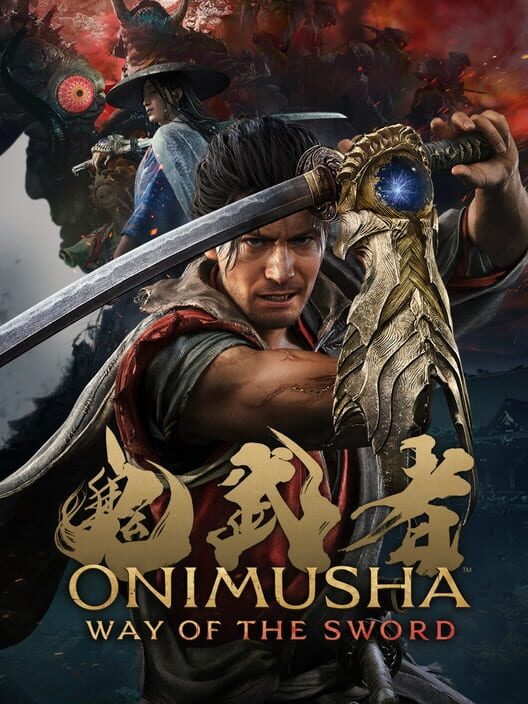
Onimusha: Way of the Sword
IGN 10/10 Review: Onimusha: Way of the Sword — Savor the Fight
Onimusha: Way of the Sword delivers a grand adventure anchored by solid, challenging combat. Well‑timed parries and the Issen mechanic push players to master combat rhythms through repeated failures. Compelling character writing and spectacular boss fights make this long‑awaited return absolutely brilliant
Price Comparison
IGN 10/10 Review: Onimusha: Way of the Sword — Savor the Fight
Onimusha: Way of the Sword delivers a grand adventure anchored by solid, challenging combat. Well‑timed parries and the Issen mechanic push players to master combat rhythms through repeated failures. Compelling character writing and spectacular boss fights make this long‑awaited return absolutely brilliant.
There are moments in Onimusha: Way of the Sword where colours drain from the world, the controller fades from your hands, and everything narrows down. The distance between you and Miyamoto Musashi vanishes. Only strikes and counters remain; the sharp crash of clashing blades, call and response. You bet everything on the next opening, the next split‑second chance, over and over again. Where Musashi stands, there is hope. Onimusha challenges you to achieve perfection within seconds of every encounter, and in turn you push yourself. An unexpected bond forms between player and protagonist, one that sticks with you. This is unquestionably a remarkable game.
Story Premise: Reimagined Sengoku‑era Japan and the war against Genma
Onimusha is a heavily fictionalised take on history. Miyamoto Musashi and his rival Sasaki Kojirō are based on real‑world samurai. Both fall victim to demonic Genma monsters. A mysterious figure from hell resurrects Musashi and forces the Oni Gauntlet onto his wrist — a relic that absorbs souls of fallen foes, already housing the spirit of a woman named Shizuka‑gozen.
Now wielding power against the Genma, Shizuka and Musashi ally with Ono Takamura, guardian of the Oni Gate, and his assistant Izumo no Okuni. Together they defend the city against corrupting evil that warps reality itself. I could go deeper into the plot, yet Way of the Sword deserves to be experienced firsthand. It is character‑driven rather than plot‑driven, and its cast is outstanding.
Character Writing: The magnetic Miyamoto Musashi and Shizuka‑gozen
At the heart of the story is Miyamoto Musashi, a hugely compelling figure. He resents the Oni Gauntlet and its borrowed power; it is not strength he earned. He is no natural hero. Gruff, at times arrogantly over‑confident, those flaws make him fascinating. His sharp tongue matches his swordsmanship. Watching him slay demons while hurling sharp retorts is pure joy. What endears him goes beyond flashy swordplay and swagger: it is the bonds he builds with others. You witness his shift from calling Shizuka “Gauntlet Woman” to forging a life‑or‑death partnership, and the evolution feels earned.
Way of the Sword also features some of the finest facial animation in gaming, paired with stellar voice acting that conveys every emotional beat. Capcom modelled Musashi after legendary actor Toshirō Mifune, faithfully recreating his likeness, mannerisms, even small habits like scratching the back of his head.
If Musashi is the heart of Onimusha, Shizuka is its soul. Trapped inside the Oni Gauntlet, she could easily have become a disposable side character. Instead she is never sidelined. Clear‑eyed and resolute, she stands beside Musashi as an independent presence, not a supporting appendage.
World & Exploration: Hub‑based box‑style Kyoto
Onimusha excels not only in narrative but also in core action‑game gameplay. Kyoto serves as your main hub, a city you must protect. Much of your time is spent hunting Genma, sealing rifts that spawn them, and destroying blighted corruption spreading across districts to unlock new areas. You are not confined to the capital; Musashi and Shizuka journey to temples, mountain peaks, forests and even the imperial palace. The world uses a hub‑and‑spoke box‑structure rather than true open‑world design, yet it holds plenty to discover. Venturing further means more combat — and combat is where Onimusha truly shines.
Combat System: Issen, Kakejō, parry and authentic samurai swordplay
Early on I found the difficulty fairly approachable, so I set myself a personal rule: beat the game without using any items. No healing consumables, no revival items, no temporary buffs. I expected to give up quickly. Countless times I teetered on quitting, telling myself I had come too far, try one more run, then drop it. In the end I persisted all the way to the credits roll.
I mention this not to boast, but to illustrate what playing Onimusha feels like. I wanted to test my own limits, and that experience cannot be separated from talking about this title.
Miyamoto Musashi is a master swordsman chaining light and heavy attacks into tight, fluid combos. Where combat truly sings is its defensive toolkit: alongside standard blocking, Musashi can evade, parry, deflect, repel blows, and — with precise timing — unleash the iconic Issen counter.
Each mechanic carries trade‑offs. Evasion is safe, yet mistimed rolls barely get you clear and offer limited counter opportunities. Deflecting carries higher risk, but breaks enemy stamina and opens them up for heavy damage. Repelling does not create openings, yet rapidly drains an opponent’s stamina gauge.
Issen represents the apex of combat, the skill you will repeatedly practise throughout Way of the Sword. Strike the attack button at the exact instant before impact, and Musashi dashes aside to deliver a devastating counter‑blow. Pulling off an Issen delivers immense satisfaction. Land it on regular Genma and you can chain successive Issen strikes to wipe out groups instantly.
Encounters also include blade‑lock quick‑time exchanges and strength contests requiring rapid button mashing depending on trigger conditions. These systems combine into a focused combat loop that never grows stale.
Every action serves a distinct purpose. Well‑timed evades build the Insight gauge. Once full, a perfectly timed dodge triggers Insight Rush, often killing lesser Genma outright or crippling elite foes.
Deflect attacks to fill the Flame Spirit gauge. Max it out to enter Flame Spirit state, wreathe your blades in fire and boost damage. Repelling works best against heavily armoured enemies immune to normal strikes: deplete their stamina, break their guard, and land a crushing Break Issen.
Issen windows are extremely strict and not usable against every incoming move. Some attacks cannot be Issen‑ed at all, forcing you to choose between evasion, deflection or repelling in split seconds. Mess up an Issen attempt and you take the full brunt of the incoming strike.
Heavily telegraphed high‑damage attacks make tempting Issen targets, yet they bring great risk. Nail the timing and you can pull off spectacular feats, such as Issen‑cutting lightning.
The presentation elevates combat further. Deflections and repels play contextual animations responding to each blow, not generic canned motions. Every fight, especially boss battles, feels like a one‑of‑a‑kind mortal duel between individuals.
Hit feedback makes or breaks action games, and few titles deliver such consistently gratifying moment‑to‑moment feel. Combine basic strikes, high‑cost high‑damage Oni Arms, guard‑breaking abilities plus additional unspoiled mechanics.
Onimusha demands both pre‑meditated strategy and sharp reaction. The most reliable ways to earn healing Yellow Souls are Oni Arms and Break Issen. A Break Issen instantly kills standard enemies.
Against bosses you target weak points: red weak points deal solid damage; purple weak points deal reduced damage but grant extra souls. My no‑item self‑challenge amplified this dynamic. Without healing items, recovery came only from absorbed souls, save‑point restores or limited Oni Arm resources.
Victory hinges on countless micro‑decisions: knowing when to deflect, repel, or gamble on Issen; managing Insight resources for perfect Insight Rushes. I needed to fully learn each fight. Some bosses took hours of repeated attempts before I gained mastery, with many near‑quitting moments.
These constraints were self‑imposed, not forced by the game. After every death I paused, breathed, and hit retry. Winning required every skill and resource available. I could not plan ten seconds ahead, only focus on the very next choice. Most of my Break Issen went toward farming Yellow Souls for survival.
Each attempt extended the fight, betting on the next ten seconds. Over time the barrier between me and Musashi faded; I reacted purely on instinct, locked inside the combat cycle. That is when Onimusha reaches its highest potential.
Several fights will stick in my memory long after finishing. They are outstanding regardless of playstyle, yet my self‑imposed restrictions made narrow comebacks and perfect execution feel even more meaningful. Like Musashi, I trusted in my own skill. When all hope seemed lost, I found openings. My journey mirrored his.
Side‑Quests, Collectibles and Bonus Content: Life and lore across Kyoto
Boss battles stand among Onimusha’s highlights, yet optional content is excellent too. Across my 39‑hour playthrough I completed every side‑mission. My favourite threads centre on Murasaki Shikibu, a writer spirit lingering in the mortal realm. She sends you to investigate strange happenings so she can record them as stories.
Cases include a child searching for a father consumed by vengeful rage, a wife praying for her abusive husband’s recovery, and a man convinced he received divine immortality blessings. Many side‑stories interconnect, weaving larger narratives documented by Murasaki Shikibu.
Not all side content gets full voice acting, yet activities like hunting hidden illustrated treasures across Kyoto, shooting flying Genma in revisited zones, and helping ordinary citizens remain fun and rewarding. Even the collectible‑style quest rescuing Shikibu’s lost komainu charm figures becomes enjoyable thanks to their charming design.
Completing quests unlock Japanese myth tales — some humorous, some sorrowful, some outright bizarre. Reading them proved rewarding. Amulets and stat‑boosting loot incentivised hunting upgrade materials throughout Kyoto and surrounding zones.
This encouraged thorough exploration: finding paths past locked‑off sections and unlocking shortcuts. Every system in Onimusha interlocks, each piece strengthening the larger whole.
Certain bosses return for repeat encounters. Revisiting past foes never felt like cheap recycled content; instead it offered chances to test improved skill and refine technique. Fighting old adversaries with Musashi’s grown strength teaches new lessons and sets up well for New Game Plus runs.
Final Verdict
I will allow myself to use consumables on my next playthrough. Beating the game without accessibility‑assist items demonstrates just how accomplished Onimusha: Way of the Sword’s combat system is. Those supporting mechanics exist for players who need them, yet the design leaves space to learn action fundamentals purely through perseverance and overcome handicaps.
Even without my self‑imposed hard‑mode rules I would still adore spending time within this world and its memorable cast. Voice‑acting and animation quality stay consistently high. Musashi ranks among gaming’s coolest, most compelling protagonists. I would still cherish this journey and its dozens of creative boss confrontations.
My adventure paralleled Musashi’s own, and Onimusha makes that possible. Some of life’s greatest joys come from challenge. You have to learn to savour the fight.
FAQ
Frequently Asked Questions
What is Onimusha: Way of the Sword?
Onimusha: Way of the Sword is a samurai‑themed action game developed by Capcom, reimagining the story of Miyamoto Musashi in a fantasy Sengoku‑era world infested with demonic Genma monsters.
What review score did IGN give Onimusha: Way of the Sword?
IGN awarded Onimusha: Way of the Sword a full 10 out of 10 score, praising its deep combat system, outstanding character writing and spectacular boss fights.
What is the Issen mechanic in Onimusha: Way of the Sword?
Issen is the signature high‑risk‑high‑reward counter skill. By attacking at the exact moment before an enemy strike lands, Musashi performs a deadly fast counterattack. Successful Issen can chain into multi‑kill Chain Issen against regular Genma foes.
Who is Miyamoto Musashi modeled after in this game?
Capcom modeled Miyamoto Musashi’s appearance, posture and small mannerisms after legendary Japanese actor Toshirō Mifune.
Is Onimusha: Way of the Sword an open‑world game?
No. It adopts a hub‑and‑spoke box‑style map structure centered on Kyoto. Players unlock new districts and travel to temples, mountains and palaces instead of having a fully seamless open‑world map.
Who is Shizuka‑gozen?
Shizuka‑gozen is a female spirit trapped inside the Oni Gauntlet. She fights alongside Musashi as an independent partner rather than a passive supporting character throughout the story.
How long does it take to beat Onimusha: Way of the Sword with side content?
A full playthrough completing all main story and side‑quest content takes roughly 39 hours according to the IGN reviewer’s playtime.
What is Break Issen used for?
Break Issen triggers after you fully drain an enemy’s stamina gauge. It instantly kills normal Genma and grants Yellow Souls for healing. Against bosses it deals heavy damage on exposed weak points.
Are there side quests in Onimusha: Way of the Sword?
Yes. Notable side content includes Murasaki Shikibu’s investigation storylines, hidden treasure hunts, rescuing collectible komainu figures and unlockable Japanese myth lore entries.
Can old boss enemies reappear in Onimusha: Way of the Sword?
Yes, several bosses return for rematch encounters. These repeated fights serve as skill‑check challenges and offer good preparation for New Game Plus gameplay.
Platforms
PlayStation 5, Xbox Series X|S
Genres
Role-playing (RPG), Hack and slash/Beat 'em up, Adventure
Themes
Action, Fantasy
Game Modes
Single player
Player Perspectives
Third person
Game Engines
RE Engine
Companies
Capcom