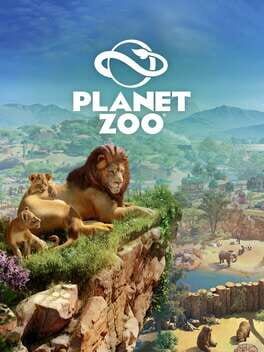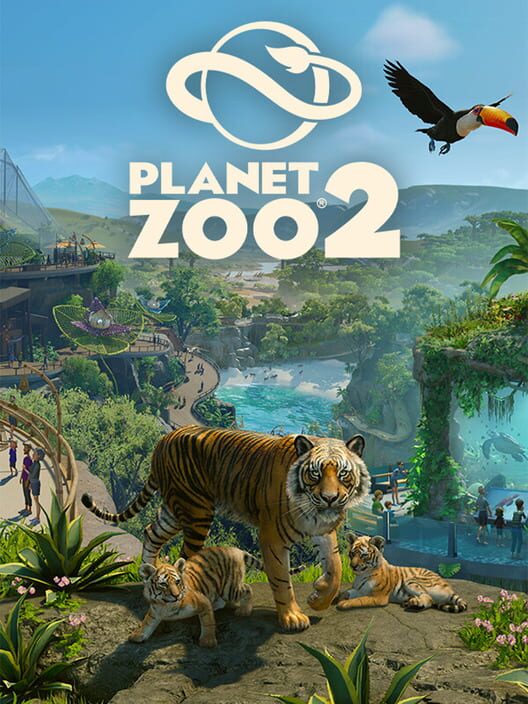
Planet Zoo 2
Planet Zoo 2 New Features: Aquariums, Aviaries and Reserves
Planet Zoo 2 expands the zoo-simulation formula with fully aquatic animals, flying birds, Wildlife Reserves, deeper building tools and returning management modes.
Price Comparison
Planet Zoo 2 adds three headline features to Frontier Developments' zoo-management formula: fully aquatic animals in custom aquariums, freely flying birds in buildable aviaries, and Wildlife Reserves where animals can be released into player-created ecosystems. It also expands the familiar mix of habitat construction, guest management, animal welfare, Career, Franchise and Sandbox play. For players deciding what is genuinely new, the major change is that conservation now extends beyond running a profitable zoo.
Frontier describes Planet Zoo 2 as a simulation and strategy game built around designing and managing zoos around the world. The sequel retains the series' animal-focused management loop, but introduces new habitat types and a reserve system that give long-term zoo planning a broader purpose.
Fully Aquatic Animals and Custom Aquariums
Fully aquatic species are one of Planet Zoo 2's largest additions. Instead of treating water as a supporting habitat feature, the game lets players create custom freshwater or saltwater aquariums for animals that live entirely in water.
Official materials specifically identify Blacktip Reef Sharks and Hawksbill Turtles among the aquatic lineup, while Frontier's feature coverage has also highlighted Red Lionfish. The important gameplay implication is that aquarium construction is a dedicated part of zoo design: players need to create an enclosed aquatic home rather than simply add a pond to a terrestrial exhibit.
This should make exhibit planning more varied. A land-animal habitat is built around terrain, barriers, shelter, food and enrichment, while an aquarium starts with the volume and presentation of the tank itself. Players can use that distinction to build a zoo with different visitor rhythms: large outdoor habitats for roaming animals, an indoor aquatic area for underwater viewing, and service facilities positioned to support both.
Frontier has not presented aquariums as a separate standalone mode. They are part of the wider zoo-management experience, so the species still need appropriate homes and must fit into a functioning guest attraction. That makes aquarium placement more than decoration: it is another way to balance animal care, guest appeal and available building space.
Flying Birds and Buildable Aviaries
Planet Zoo 2 also introduces fully flying birds. Players can house them in customizable aviaries made with barriers, support poles and dynamic mesh covers. Unlike a conventional habitat, an aviary is designed to give birds room to move through the air while keeping them safely contained.
Frontier has named the Toco Toucan and Secretarybird as examples of the game's birds. Its feature coverage also says the aviary animals have behaviors on the ground and in the sky, with nesting and cohabitation among the elements discussed for the bird system.
For builders, this creates a new vertical design problem. An aviary has to work as a visible guest attraction, but it also needs enough height and a sensible boundary shape for the birds' flight space. Support structures and mesh covers can become part of the zoo's architecture, whether the goal is a compact walkthrough-style bird area or a larger landscaped enclosure.
For management-minded players, flying animals should also make species selection and habitat planning more deliberate. It is sensible to reserve space for an aviary early instead of trying to squeeze one into a mature zoo, because its height and footprint can affect paths, viewing areas and nearby scenery.
Wildlife Reserves Take Conservation Beyond the Zoo
Wildlife Reserves are the feature that most clearly separates Planet Zoo 2 from a conventional park-management sequel. These are customizable, expansive natural areas where players complete conservation projects and meet requirements before releasing animals into living ecosystems they have created.
The reserve concept changes the role of animal care. In the zoo, the immediate aim is to make suitable habitats, attract guests and earn money for expansion. In a reserve, the focus is on designing, rewilding and observing a more natural home for released animals. Frontier also says reserves can be improved through research while maintaining a minimal staff presence.
That difference matters because it gives players two related, but distinct, planning goals. Zoo construction is guest-facing and operational: paths, amenities, education and exhibit visibility all matter. Reserve construction is conservation-facing: the release requirements and ecological space take priority. A player can therefore build a polished public zoo without treating the reserve as another guest-heavy district.
The official descriptions do not provide a full list of every release requirement, so players should avoid assuming that every species can be released immediately or that all reserve goals work the same way. What is confirmed is that releases are tied to conservation projects and specific requirements.
Animal Behavior and Habitat Welfare
Animal welfare remains central to Planet Zoo 2. Frontier says each species has its own needs and behaviors, and has highlighted herd behavior and grazing on provided vegetation as examples. Lions and Western Chimpanzees are among the returning animals named in official material, alongside new species.
In practice, this means a visually impressive exhibit is not necessarily a successful one. Players should plan habitats around the animal first, then build guest viewing around that foundation. Give yourself room for terrain, vegetation, food, shelter and the social space a species may need before committing to paths and decorative pieces.
This approach is especially useful for early zoo layouts. Build a small number of complete, manageable habitats rather than opening an oversized park with too many unfinished areas. A reliable animal-care base gives the zoo a better chance of improving its appeal and finances, which can then fund larger exhibits, aquariums and aviaries.
More Flexible Zoo-Building Tools
Planet Zoo 2 supports both ready-to-place blueprints and piece-by-piece construction. Frontier has confirmed scaling, flexi-colour options, pathing tools, foliage and terrain brushes, allowing players to work quickly with prepared structures or customize a zoo at a much finer level.
The game includes four new scenery themes based on architecture from around the world, alongside five returning themes from the original Planet Zoo. That gives builders a large set of visual directions without requiring every area of a zoo to use the same style.
A practical way to use these tools is to establish a clear visitor route first. Put entrance amenities, education points, toilets and food options where guest traffic will naturally pass them. Then use scenery themes to distinguish major zones, such as an aquarium complex, a bird garden or a regionally themed animal area. This keeps a large zoo readable while still leaving room for detailed creative work.
Guest Management Still Drives Expansion
Planet Zoo 2 is not only a habitat-building game. Guests visit to see appealing animals, and their attendance contributes to zoo rating and income. Frontier says players can provide educational opportunities, shops and amenities while using revenue to finance further growth.
The loop is straightforward but important: create good animal habitats, make them accessible and worthwhile for visitors, reinvest the resulting money, and continue improving the park. The new aquatic and flying-animal systems should provide fresh centerpiece exhibits, but they still need to function within this broader management loop.
New players should not overlook education and guest services while concentrating on construction. A zoo can look coherent from an overhead building view yet feel incomplete if visitors do not have convenient amenities or useful places to observe animals. Treat viewing areas, paths and facilities as parts of the exhibit plan rather than additions saved for the end.
Career, Franchise, Sandbox and Frontier Workshop
Planet Zoo 2 includes several ways to play. Career mode follows the Fauna and Ecosystems Network, or FEN, as players build a global network of zoos and Wildlife Reserves. Franchise mode allows players to trade animals with other players, while Sandbox mode is intended for unrestricted creative building.
These modes suit different priorities. Career is the best starting point for players who want structured objectives and an introduction to the new reserve concept. Franchise is the social management option for those interested in the animal-trading economy. Sandbox is the natural home for detailed builders who want to make an elaborate aquarium, aviary or themed zoo without centering the session on progression.
Frontier Workshop supports community-made blueprints and creations. The official Steam listing says players can explore, download and subscribe to creations from across platforms before placing them in their zoos. That is useful for speeding up routine construction, but it can also provide a starting point for learning how other players approach complex builds.
What the New Features Mean for Players
Planet Zoo 2 is built for two overlapping audiences: simulation players who want animal welfare and park finances to matter, and creative players who want more types of habitats to construct. Aquariums and aviaries broaden the possible zoo layout. Wildlife Reserves add a conservation-oriented objective beyond guest-facing expansion. The returning management systems tie those features together.
For the strongest start, build gradually, prioritize animal needs, leave room for major specialist exhibits, and use Career mode if you want structure. Players who primarily want to design may get the most value from Sandbox and Frontier Workshop, while Franchise offers the game’s animal-trading component. The sequel's central promise is not merely more animals, but more ways to build for them and a new reason to move them beyond the zoo.
Sources
FAQ
Frequently Asked Questions
What are the biggest new features in Planet Zoo 2?
The main additions are fully aquatic animals and custom aquariums, fully flying birds and customizable aviaries, plus Wildlife Reserves for conservation projects and animal releases.
Can you build aquariums in Planet Zoo 2?
Yes. Frontier says players can build custom freshwater or saltwater aquariums for fully aquatic species, including examples such as Blacktip Reef Sharks and Hawksbill Turtles.
Are flying birds in Planet Zoo 2?
Yes. Flying birds can live in customizable aviaries built with barriers, support poles and dynamic mesh covers. Frontier has named the Toco Toucan and Secretarybird as examples.
What are Wildlife Reserves in Planet Zoo 2?
Wildlife Reserves are customizable natural ecosystems where players take on conservation projects, meet release requirements and release animals beyond the zoo.
Does Planet Zoo 2 have Career, Franchise and Sandbox modes?
Yes. Career mode centers on FEN and a global network of zoos and reserves, Franchise mode includes trading animals with other players, and Sandbox supports unrestricted creative building.
Platforms
PC (Microsoft Windows), PlayStation 5, Xbox Series X|S
Genres
Simulator, Strategy
Themes
Business, Sandbox, Educational, Kids
Game Modes
Single player
Player Perspectives
Bird view / Isometric
Game Engines
Cobra
Companies
Frontier Developments