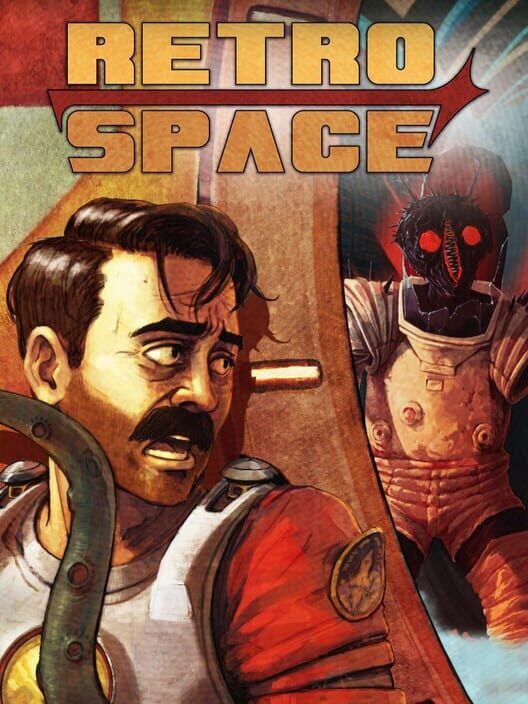
RetroSpace
RetroSpace Mechanics Guide: Stealth, Mutamods and Cloning
Learn how RetroSpace approaches stealth, combat, hacking, exploration, Mutamods, environmental traps, and cloning on the Aurora 5 space station.
Price Comparison
RetroSpace is an immersive first-person space-horror game built around player choice. Its central gameplay loop is not simply about shooting mutants: the game lets you sneak, hack, create distractions, exploit hazards, discover alternate routes, or take a direct combat approach while exploring the Aurora 5 space station. The most important thing to understand before playing is that obstacles are designed to have more than one solution.
That makes RetroSpace less about finding a single intended answer and more about reading a room, studying enemies, and using the tools and systems available. Your choices extend to character upgrades through Mutamods, while death leads into a cloning and recovery system rather than a conventional permanent failure state.
Choose a Route Before You Choose a Fight
RetroSpace describes Aurora 5 as a massively interconnected station with secrets, shortcuts, alternate paths, and hidden areas. As new areas open, players can gain access to routes that loop back toward locations already visited. A mostly peaceful central hub gives you a place to return to when exploring the station.
This structure means a locked door or guarded corridor should not automatically be treated as a combat encounter. Look for another entrance, a way to redirect attention, a station system that can change the situation, or a route that becomes available after progressing elsewhere. Exploration is a practical part of survival because hidden paths and shortcuts can reduce the need to repeat dangerous encounters.
Use the Hub as a Planning Point
When a new area becomes overwhelming, returning to the hub can help you reassess rather than repeatedly forcing the same approach. Keep track of doors, inaccessible routes, suspicious side rooms, and security devices encountered earlier. RetroSpace's connected layout suggests that a location which seems blocked now may become useful later after you find a new path or ability.
The strongest general approach is to explore deliberately. Clear visual information, learn how the current section connects to the rest of Aurora 5, then decide whether your objective requires a direct confrontation at all.
Stealth Is a Full Playstyle, Not a Brief Detour
Players can avoid enemies entirely, hide, use diversions, set traps, or lure opponents away from an objective. Stealth therefore works as more than a way to begin a fight with an advantage. In some situations, total avoidance is a valid solution.
Before moving through a hostile space, take time to identify patrols, sightlines, cover, exits, and nearby systems. The game emphasizes that its enemies differ from one another, with distinct behavior, abilities, and weaknesses. A tactic that works against one creature may be ineffective against another, so observation matters.
Create Space Instead of Chasing Eliminations
In a stealth-oriented run, the goal is usually to create a safe opening rather than remove every enemy. A diversion can pull an opponent away from a route. A trap can make a narrow passage safer. A hidden route can bypass the problem altogether. This preserves resources and avoids turning every discovery into a prolonged battle.
Do not assume that an enemy-free room is always the best outcome. If the objective is beyond a guard and the guard can be lured elsewhere, moving through quickly may be more efficient than committing to an uncertain fight.
Combat Works Best When the Environment Helps You
RetroSpace supports a direct action approach, but the game frames combat as part of an interconnected simulation. Players can manipulate station systems, exploit environmental hazards, and turn security against hostile creatures. Security systems can be deadly, but the game specifically suggests that they can also become traps or unlikely allies when handled correctly.
The practical lesson is simple: do not fight on the enemy's terms when the environment offers another option. Notice hazards and devices before opening fire. Consider whether an enemy can be lured into a dangerous area, whether a system can disrupt its movement, or whether security can be redirected toward the threat.
Adapt to Enemy Behavior
The game encourages players to learn enemy behavior rather than rely on one universal weapon strategy. When an opponent has an unusual ability or movement pattern, treating the encounter as a small problem to solve can be more effective than trying to overpower it immediately.
That does not mean combat is discouraged. RetroSpace explicitly supports an aggressive path, and direct action may be the right answer when stealth has failed or when an environment gives you a decisive advantage. The point is to make combat intentional: use positioning, systems, traps, and knowledge of enemy behavior to improve the odds.
Hacking, Diversions, and Traps Expand Your Options
Hacking is one of the methods RetroSpace lists for solving obstacles, alongside stealth, diversions, traps, hidden routes, and combat. The game's official description does not provide a complete breakdown of every hacking interaction, so it is best not to assume every terminal or device will work the same way. What is clear is that station systems are part of the game's problem-solving toolkit.
When you encounter a guarded route, scan the surrounding area before committing. A terminal, security element, environmental hazard, or alternate entry point may turn a difficult encounter into a manageable one. This is particularly important in confined station corridors, where a trap or a redirected defense can have more impact than firing from the open.
Diversions are useful because they change enemy positioning. Traps are useful because they turn predictable movement into an advantage. Hacking is useful because it may alter the environment itself. Combining those ideas is likely to be stronger than treating them as isolated mechanics.
Mutamods Change How You Play
Mutamods are RetroSpace's mutation-based upgrades. The official game description says they can improve stealth, combat, exploration, and mobility. Examples given by the developer include becoming tentacle-armed, mind-controlling, or shadow-lurking, but the exact effects and available combinations should be discovered in-game.
The important tradeoff is that Mutamods can have unexpected and irreversible side effects. They are not presented as harmless stat boosts. Treat each upgrade as a build-defining decision that may influence how you approach future spaces, enemies, and routes.
Pick Mutamods for Your Actual Approach
If you prefer avoiding fights, prioritize upgrades that support stealth, movement, or exploration. If you expect to confront enemies directly, combat-focused mutations may better suit your run. Players who enjoy experimentation can use the system to develop stranger hybrid strategies, but should remember that irreversible side effects make uninformed choices consequential.
Because RetroSpace supports multiple solutions, a versatile mutation may be more valuable than a narrowly powerful one. An upgrade that opens routes or improves mobility can potentially solve problems that a combat-only benefit cannot.
Death Starts a New Problem Instead of Ending the Run
Death is an integral mechanic in RetroSpace. Aurora 5 can create more clones of the player character, allowing the journey to continue after death. However, cloning comes with consequences: the game warns of cloning degeneration, and it encourages players to recover equipment from their former self.
This creates a recovery loop. Dying may return you to the game, but it can leave gear behind and impose new complications. Do not treat cloning as permission to ignore danger. A reckless death can create a difficult return trip through the same hostile station section to reclaim what was lost.
Plan for Retrieval
When entering a high-risk area, think about the route you would need to take if you had to recover your equipment. Shortcuts, hub access, and enemy knowledge all become more valuable when a previous body and its gear are waiting in a dangerous location. A cautious approach can save time because it reduces the chance that recovery becomes the next major objective.
A Simple RetroSpace Strategy for New Players
- Scout a room before attacking. Identify enemies, exits, hazards, devices, and alternative routes.
- Decide whether the objective needs combat. Avoidance, distraction, hacking, and traps may be enough.
- Use the environment to shift the encounter in your favor, especially security systems and hazards.
- Learn individual enemy behavior and adjust your plan instead of repeating the same tactic.
- Choose Mutamods that complement your preferred style, while accounting for their irreversible side effects.
- Explore for shortcuts and secret paths so future travel and gear recovery are less dangerous.
- Respect death and cloning. Continuing after death is possible, but retrieving lost equipment can carry real risk.
RetroSpace rewards players who stay flexible. Its stealth, combat, exploration, environmental systems, mutations, and cloning mechanics all feed into the same idea: assess the situation, use what the station gives you, and choose the solution that fits your current build and tolerance for risk.
Sources
FAQ
Frequently Asked Questions
Can you play RetroSpace without fighting every enemy?
Yes. RetroSpace supports stealth, total avoidance, diversions, traps, hacking, and alternate routes alongside direct combat.
What are Mutamods in RetroSpace?
Mutamods are mutation-based upgrades that can improve stealth, combat, exploration, and mobility, but they may also have unexpected irreversible side effects.
What happens when you die in RetroSpace?
Aurora 5 can create a new clone, allowing you to continue, but cloning has consequences and you may need to recover equipment from your former self.
Is Aurora 5 open to explore in RetroSpace?
Aurora 5 is a massively interconnected station with shortcuts, secrets, hidden areas, alternate paths, and a central hub that links exploration.
Can security systems be used against enemies in RetroSpace?
Yes. RetroSpace says players can manipulate interconnected systems and can turn security systems into traps or allies against enemies.
Platforms
PC (Microsoft Windows), PlayStation 5, Xbox Series X|S
Genres
Shooter, Simulator, Adventure, Indie
Themes
Action, Stealth
Game Modes
Single player
Player Perspectives
First person
Game Engines
Unity
Companies
The Wild Gentlemen, Kwalee