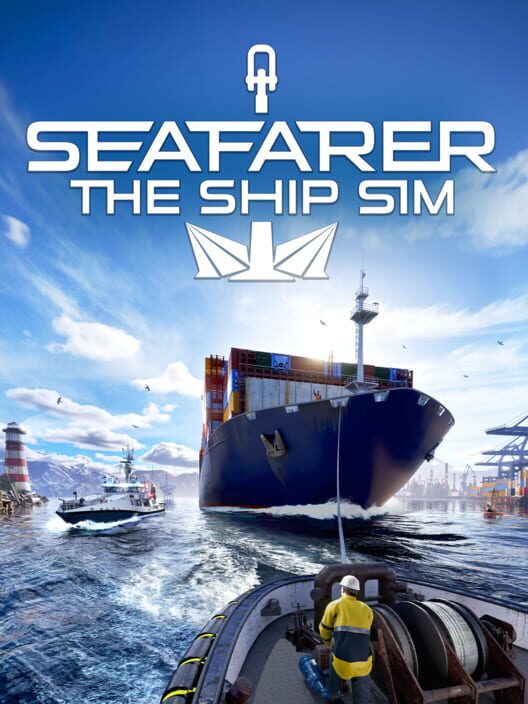
Seafarer: The Ship Sim
Seafarer: The Ship Sim Beginner Guide
Learn how to start your maritime career in Seafarer: The Ship Sim, choose missions, manage ships, build reputation, and play solo or with a crew.
Price Comparison
Seafarer: The Ship Sim is easiest to approach as a career simulator rather than a traditional action game. Begin with the story mode to learn the world and mission structure, then use cargo work, rescue operations, firefighting, patrols, and other contracts to build reputation and expand your fleet. You can play alone or with a crew of up to four players, so your best starting route depends on whether you want a guided maritime campaign or open-ended voyages.
Choose the Right Starting Mode
Seafarer offers a story mode and a quickplay mode. Story mode follows Teddy, an experienced captain whose career is connected to sabotage, piracy, and old secrets. It provides a narrative reason to move through the maritime world and introduces the broader setting through a campaign.
Quickplay is better suited to players who want to focus on individual jobs and ship handling. Use it when you want to practice a particular type of work, explore the open world, or play a shorter session without progressing through the campaign. Starting with story mode is the most useful option for new players because it gives your early voyages more context.
Learn the Core Career Loop
The main progression loop is straightforward: choose work, complete missions, earn reputation, unlock opportunities, and grow your fleet. Different harbors and factions provide reasons to keep moving around the map, while the available jobs give each voyage a practical objective.
At the beginning, concentrate on completing assignments cleanly instead of rushing toward the largest ship. A smaller vessel is generally easier to position in confined areas and gives you room to understand steering, docking, navigation, and onboard interactions. Once you are comfortable with those basics, larger ships and more specialized tasks become easier to manage.
Pay attention to the type of contract before accepting it. Cargo work emphasizes transportation between ports, while coastguard-style operations can involve rescues, patrols, or firefighting. These activities use different tools and demand different approaches, so selecting varied missions is a useful way to learn the full game.
Understand the Ships and Their Roles
Seafarer includes a diverse fleet ranging from small boats to cargo ships and tankers. The important difference is not only size. Each vessel changes how you approach a job, how much space you need to maneuver, and which onboard equipment is available.
Small boats are useful for learning navigation and responding to tasks that require precision. Cargo ships and tankers are more appropriate for transporting larger or more specialized loads, but they demand more planning when turning, approaching ports, and lining up with objectives. Before setting out, make sure the selected ship suits the contract rather than choosing a vessel only because it is larger.
Vessels can also be customized with names, colors, flags, and logos. These options are primarily a way to personalize your growing fleet, but they also make it easier to distinguish ships once you own several of them.
Use the Right Tool for Each Mission
Many missions are built around interactive equipment rather than simple point-to-point travel. Cranes support cargo work, water cannons are used during firefighting operations, and drones can help with scouting. Rescue equipment is available for maritime assistance tasks.
When a mission provides a specific tool, treat it as part of the objective rather than optional decoration. Read the task carefully, identify the required equipment, and allow enough time to position the ship before starting the interaction. Good positioning is often more important than speed, especially when working near a harbor, a distressed vessel, or an active fire.
It is also worth learning how responsibilities can be divided in multiplayer. A crew can share duties on board and coordinate during missions. One player can focus on ship movement while another handles an onboard tool or watches the developing situation. Clear communication is especially valuable during rescue and firefighting work, where several actions may need to happen in sequence.
Plan Around Weather and Ocean Conditions
Changing weather and ocean currents affect navigation, while the game also includes a dynamic day and night cycle. These systems make the same route feel different depending on the conditions and time of day.
Do not treat every voyage as a straight line between two markers. Allow additional time when visibility is reduced or when currents influence your approach. A cautious route can be more efficient than correcting a poor approach near the destination. If you are still learning a ship, use calmer conditions to practice turning and docking before taking on a difficult contract in a more demanding situation.
Unexpected events, radio calls, and daily challenges can also interrupt a routine voyage. Keep an eye on new information while traveling and avoid becoming so focused on the destination that you miss a nearby task or emergency.
Build Reputation Before Expanding Too Quickly
Reputation is tied to your progress across harbors and factions. Completing missions opens new opportunities and helps you develop your maritime career. This makes consistent performance more valuable than accepting every available contract without considering its requirements.
A practical early-game routine is to alternate familiar jobs with new mission types. Use cargo transport to become comfortable with routes and port approaches, then try patrols, rescue work, or firefighting as you gain confidence. This broadens your experience without forcing you to learn every system at once.
Fleet expansion should follow your ability to manage different vessels. Owning more ships gives you flexibility, but a larger fleet is most useful when you understand which ship fits each contract. Keep track of the strengths of your vessels and select them according to the work ahead.
Playing Solo or in Multiplayer
Seafarer supports solo play and multiplayer with a crew of up to four players. Solo play gives you complete control over the pace of a voyage and is a good way to learn the controls, mission objectives, and equipment. It also lets you pause your decision-making process and focus on one task at a time.
Multiplayer changes the experience by allowing players to share duties aboard the ship. Before starting a contract, agree on who will steer, who will operate equipment, and who will monitor mission information. A simple division of responsibilities prevents duplicated actions and makes complex jobs easier to coordinate.
If someone in the group is new, assign them a clear supporting role first. Handling a drone, rescue equipment, or another focused task can be a more manageable introduction than controlling a large vessel while also learning the mission.
Recommended First-Hour Routine
- Start the story mode and follow its early objectives.
- Read the requirements of every contract before selecting a ship.
- Practice steering, docking, and basic onboard interactions on a low-pressure voyage.
- Complete at least one cargo or transport mission to learn port navigation.
- Try a rescue, patrol, or firefighting activity to understand specialized equipment.
- Use quickplay to repeat a mission type that still feels unfamiliar.
- Expand your fleet only after you know which vessel roles you actually need.
The central lesson is to treat each voyage as both a job and a training exercise. Seafarer: The Ship Sim rewards players who plan their routes, choose suitable vessels, and use the correct equipment. Once those habits become familiar, the game's open world, career progression, changing conditions, and cooperative missions provide a flexible foundation for longer maritime sessions.
Sources
FAQ
Frequently Asked Questions
What should beginners do first in Seafarer: The Ship Sim?
Start with story mode to learn the setting and mission structure, then complete a mix of transport, rescue, patrol, and firefighting jobs.
Can you play Seafarer: The Ship Sim solo?
Yes. The game supports solo play as well as multiplayer with a crew of up to four players.
How does progression work in Seafarer: The Ship Sim?
You complete missions, build reputation across harbors and factions, unlock new opportunities, and expand your fleet.
What types of missions are in Seafarer: The Ship Sim?
Mission types include cargo transport, rescue operations, firefighting, patrols, and other maritime events.
What tools can you use during missions?
Depending on the assignment, you can use cranes, water cannons, drones, and rescue equipment.
Platforms
PC (Microsoft Windows), PlayStation 5
Genres
Simulator
Game Modes
Single player
Player Perspectives
First person, Third person
Game Engines
Unreal Engine 5
Companies
astragon Entertainment