
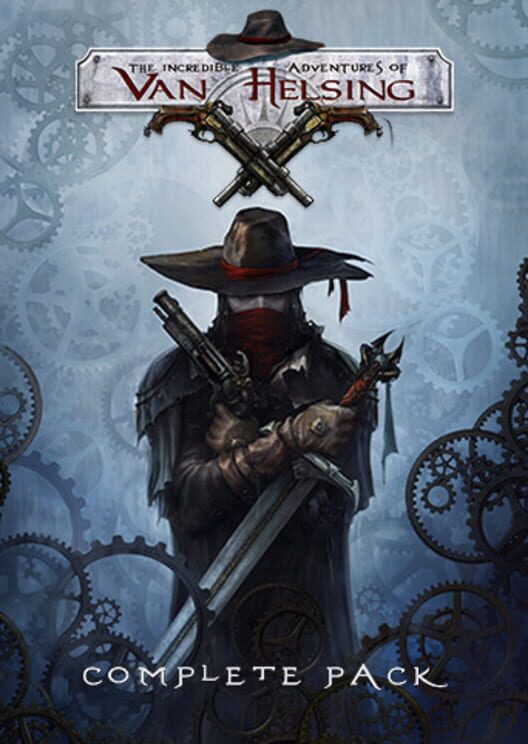
The Incredible Adventures of Van Helsing: Complete Pack
Van Helsing Complete Pack Mechanics Guide
Learn how classes, Rage PowerUps, Lady Katarina, the Hunter's Lair, crafting, scenarios, and endgame progression work in Van Helsing Complete Pack.
Price Comparison
The Incredible Adventures of Van Helsing: Complete Pack is an isometric action RPG built around class-specific skills, loot progression, a customizable ghost companion, and a shared hub called the Hunter's Lair. The GOG listing groups the Complete Pack with The Incredible Adventures of Van Helsing: Final Cut, the definitive version that combines the trilogy into one continuous story. For a new player, the most important systems to understand are your chosen class, the Rage-powered skill modifiers, Lady Katarina's setup, and the practical services available in the Lair.
Combat is not only about repeatedly using the same attack. The game gives each class its own skill tree and asks you to combine active abilities, equipment upgrades, positioning, and PowerUps. Learn those foundations early, and the campaign's loot, crafting, defense activities, and later scenario content become much easier to follow.
Start With a Class You Want to Learn
The Final Cut version offers six playable classes, each designed as a different kind of monster hunter. The official store description frames their approaches broadly: some fight with steel and guns, while others use weird science, magic, or shadow-based powers. Because skill trees are unique to each class, your first meaningful decision is selecting a combat style you will enjoy for dozens of hours rather than trying to find a universally best class.
A direct combat class is a sensible fit if you want to stay near enemies and focus on weapons and immediate damage. A ranged or gun-oriented approach may suit players who prefer attacking from a safer position. The more mystical or science-driven options are better choices for players who enjoy managing abilities, effects, and combinations. Those are playstyle distinctions rather than rigid rules: the important point is that a class's skills shape how it handles groups, stronger targets, and survival.
When spending skill points, begin by making a small number of reliable tools work well. You need an answer for routine enemies and a dependable option for dangerous foes. Avoid spreading early points across every newly unlocked skill simply because it is available. A focused setup makes it clearer which attacks are worth enhancing with gear and Rage PowerUps later.
Rage and PowerUps: The Key Combat Modifier System
Rage is one of Van Helsing's defining combat systems. According to the official description, impressive feats in battle earn Rage points, which can be spent to charge up to three skill modifiers called PowerUps. In practical terms, PowerUps let you alter or strengthen a skill at the moment you need more from it instead of treating every cast as identical.
Do not think of Rage as a resource that must always be saved for a boss. It is most valuable when it turns a threatening situation in your favor: a crowded encounter, a durable elite enemy, or a moment when a particular attack needs a stronger effect. Since the details depend on your current class and selected skill, read each available modifier before assigning it. A modifier that improves the way you actually use an ability is more useful than one that sounds powerful but does not match your build.
It also helps to keep one regularly used skill in mind as your PowerUp target. If your build relies on a primary attack for most fights, modifiers for that skill give Rage a clear purpose. As you unlock more skills, reassess whether your chosen PowerUps still support your preferred damage pattern, range, and defensive needs.
Lady Katarina Is a Configurable Companion
Lady Katarina is more than a story companion. The game allows players to use her special abilities and tailor her skills, making her an active part of the build. Treat her configuration as an extension of your hunter rather than an optional menu to ignore.
Her value is especially apparent when her abilities cover something your own class does not handle comfortably. A character built around close-range attacks may benefit from companion support that helps manage encounters at a distance, while a more fragile ranged character may value help that reduces pressure from enemies. The exact choices available should be judged in-game, but the general principle is consistent: give Katarina a role that complements your own weaknesses or reinforces your strongest tactic.
Review her skills whenever you make a substantial change to your own equipment or active abilities. A companion setup that worked while leveling with one damage style may be less useful after you commit to another. Keeping both characters aligned is more productive than changing one build while leaving the other untouched.
Use the Hunter's Lair as Your Progression Hub
The Hunter's Lair is the game's central operational space. The official feature list says it can be developed and used to store collected loot, trade with non-player characters, teleport between locations, and forge new items. That makes it the place to pause between missions, decide what to keep, and prepare for the next stretch of combat.
Loot, trading, and forging
Loot is central to character growth, but not every drop deserves equal attention. Compare equipment in the context of your current skills. A piece that helps an ability you use constantly can be a better upgrade than an item with a more impressive-looking but irrelevant bonus. Store potentially useful alternatives when you are uncertain, especially if they may support a different skill direction later.
The Lair's trading and forging functions give you a way to turn collected resources into practical progress. Before forging, be clear about the problem you are trying to solve. Are you lacking damage against tougher enemies, durability during large fights, or support for a favored skill? Purposeful upgrades are easier to evaluate than changing gear repeatedly without a goal.
Travel and preparation
Teleporting from the Lair reduces unnecessary backtracking, so use visits to consolidate several tasks at once: clear inventory clutter, compare equipment, check Katarina's setup, and prepare skills before heading out. This routine becomes increasingly useful as the continuous campaign opens more locations and systems.
Defense Activities Add Another Layer to the Lair
Van Helsing also includes a tower-defense-style activity. Enemies can invade the Hunter's Lair and other strategic locations in waves, while the player uses deployable traps and upgradable functions to defend them. This mode has a different rhythm from ordinary action RPG combat because preparation matters alongside direct fighting.
Approach these encounters by identifying where enemies are likely to concentrate and by using the available defensive tools to support your character rather than replace them. Your hunter and Katarina still matter in the fight, so choose abilities that work well when enemies cluster or break through. Upgrades and traps should create time and control, allowing you to respond to the most dangerous threats instead of reacting to every enemy individually.
What Happens After the Main Campaign
Final Cut is designed to continue past the main story. The official description lists a level cap of 100, a Glory system, rare items, two types of unique endgame currency, and scenario maps. Scenarios use randomly generated terrain, monsters, objectives, and special conditions, giving players repeatable missions that differ from fixed campaign quests.
That structure changes the purpose of your build. During the campaign, a versatile setup that handles unfamiliar situations is usually valuable. In scenario content, you can refine equipment, skills, and PowerUps around the content that is giving you trouble. Read special conditions before committing to a familiar routine, because a scenario's objective or modifiers may reward a different approach.
The game also lists daily quests, challenges, and weekly events as post-campaign activities. Availability of online functions can depend on the platform service and account requirements, so it is sensible to confirm the current store information before planning around multiplayer or other online features. GOG states that a free Neocore account is required for online multiplayer and other online features.
How Multiplayer Fits Into the Game
The official listing describes four-player co-op and several competitive modes: Touchdown, Arena, and Battle Royal. Co-op can make it easier to cover multiple combat roles, but it also rewards coordination. Group members should avoid duplicating the same narrow job where possible and should communicate before investing heavily in a shared plan.
For solo players, nothing in the core progression requires treating multiplayer as the main experience. The campaign, class skill trees, companion management, Lair development, tower-defense activity, and scenario-based endgame provide substantial systems to engage with independently. The best way to begin is therefore simple: choose a class whose combat feel appeals to you, build a dependable core skill set, assign purposeful PowerUps, and make the Hunter's Lair part of your regular preparation loop.
Sources
FAQ
Frequently Asked Questions
How many classes are in Van Helsing Final Cut?
The definitive Final Cut version has six playable classes, each with its own skill tree and combat approach.
What is Rage used for in Van Helsing?
Rage points are earned through impressive feats in combat and spent to charge up to three skill modifiers called PowerUps.
Can you customize Lady Katarina?
Yes. Lady Katarina has special abilities and skills that can be tailored to complement your hunter's build.
What can you do in the Hunter's Lair?
The Hunter's Lair lets you store loot, trade, teleport between locations, forge items, and take part in defense-focused activities.
Is there endgame content in Van Helsing Final Cut?
Yes. The game includes progression to level 100, the Glory system, rare items, unique endgame currencies, and randomly generated scenario maps.
Genres
Role-playing (RPG)
Themes
Action, Fantasy
Game Modes
Single player, Multiplayer, Co-operative