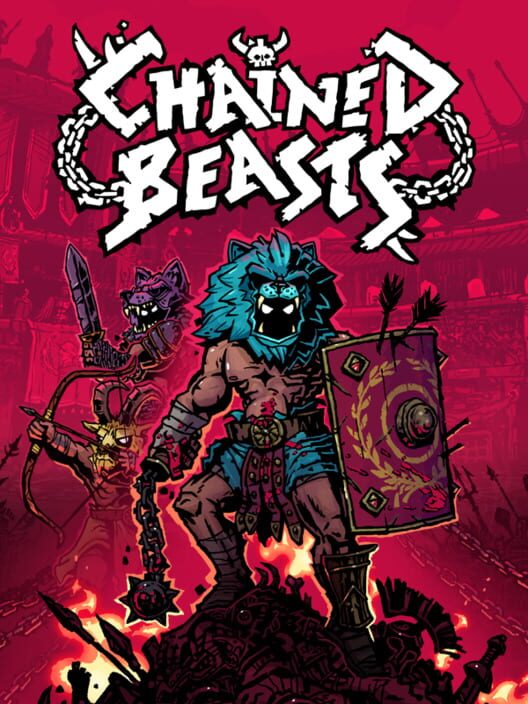
Chained Beasts
Chained Beasts Beginner Guide: How to Survive the Arena
Learn how chains, arena hazards, wounds, crowd support, equipment, and co-op coordination shape every run in Chained Beasts.
Price Comparison
Chained Beasts is easiest to understand when your team treats the chain as a shared weapon and a shared problem. This 1-4 player co-op gladiator roguelike puts players into violent arena battles while physically tethered together. Success is not only about attacking quickly: your group needs to manage spacing, use arena hazards, react to lasting injuries, and make decisions that keep the crowd on its side. For new players, the best early habit is simple: stay aware of where your allies are moving before committing to an attack.
The game can be played alone, but its central chain mechanic is designed around cooperation. In a full group, one reckless move can pull teammates into danger, leave someone tangled around scenery, or disrupt a planned attack. Conversely, coordinated movement can turn the chain into a tool for tripping enemies and creating openings. This guide explains the systems that matter most when starting a run.
Understand What the Chain Changes
The chain is more than a visual gimmick. It changes positioning, movement, target selection, and recovery after a mistake. When multiple gladiators run in different directions, the group can lose momentum or become caught on an arena obstacle. Before charging into a pack of enemies, take a moment to identify a shared direction of travel.
A practical approach is to designate the player closest to the next objective or enemy group as the movement lead. The others do not need to stand in a rigid line, but they should avoid immediately sprinting away from that player. This reduces sudden pulls and gives the team room to react when an enemy attacks.
Move Around Enemies, Not Directly Through Them
Approaching from several angles may sound useful, but it can make a chained team vulnerable. If allies split to opposite sides of an enemy cluster, the chain can pass through the center of the fight and make everyone harder to control. Instead, rotate together around the edge of the group. This keeps the chain from becoming a liability while still allowing the team to surround threats gradually.
The developer describes the chain as something players can use to trip opponents. Look for moments when enemies are following one player or moving through a narrow lane. A teammate can move to create tension across that path, while the rest of the group stays ready to capitalize once an opponent is interrupted. Do not overextend simply to set up a trip; the follow-up attack matters more than the setup.
Recover From Tangles Quickly
A chain caught around a pillar or other obstacle can turn a manageable fight into a chaotic one. Avoid trying to solve the problem while every player pulls in a different direction. First, stop spreading farther apart. Then have one player move around the obstacle while the others give them room instead of adding more tension. Clear communication is useful here, especially in local co-op where players may be focused on their own character.
Use the Arena as Part of Your Damage Plan
Chained Beasts encourages players to use the environment during combat. Official descriptions specifically mention throwing urns, throwing enemies into urns, charging foes into spike walls or snake pits, and throwing weapons at targets from a distance. These actions are valuable because they let a team control a crowded arena without relying solely on close-range attacks.
When a fight begins, scan the arena before committing. Note hazards, throwable objects, narrow passages, and open routes for retreat. A team that knows where the spike wall is can reposition toward it instead of fighting in an empty center space. This is especially helpful when enemies start to outnumber you.
Do Not Waste Every Throwable Immediately
Urns and weapons are most useful when they solve a specific problem. Throwing an object at the first enemy you see may provide a short advantage, but saving it can be better when a dangerous foe stays out of melee range or when the group needs space to recover. Since the Steam description warns that throwing a weapon can leave you without one, make sure the team has a way to continue fighting before throwing its last available weapon.
Use hazards to break up pressure. If the team is being compressed against an arena edge, move along the perimeter and try to guide enemies into a known obstacle or hazard. Avoid standing between a hostile group and the feature you want to use. Otherwise, a charge or knockback may put your own gladiators in the dangerous position.
Expect Injuries to Change the Run
Injuries are a defining part of Chained Beasts. The game describes physical and mental wounds that alter how a character plays, with examples including a limp, loss of an eye, and hallucinations. These are not merely cosmetic setbacks. They are a reason to reassess the role each player is filling after a hard battle.
When an injury affects mobility, that player should not automatically be asked to lead every engagement. Let a more mobile ally guide the team through hazards while the injured player stays in a position where they can contribute without being dragged through the center of the fight. If an injury makes aiming, awareness, or timing more difficult, simplify that player's job: hold a safer flank, focus on nearby targets, or follow a teammate's movement call.
Choose Relief Carefully
The game includes potions intended to relieve pain, but the developer notes that their side effects can create worse afflictions. Surgery is also presented as a possible answer. The important beginner lesson is that recovery options are trade-offs, not automatic upgrades. Read the available choice carefully and consider the condition of the whole team rather than only the character currently suffering.
A difficult injury may be manageable if the rest of the group can cover its weakness. A risky remedy may be worthwhile when the current condition is actively preventing the team from surviving the next battle. Discuss the choice before selecting it in co-op, because its consequences may change how everyone must move and fight.
Build for the Current Run, Not an Ideal One
Chained Beasts includes skills, equipment, weapons, character unlocks, and different paths through a run. That means a good choice depends on what the group already has, what injuries it is carrying, and what kind of encounters are ahead. There is no verified universal build that fits every team composition.
In general, prioritize options that address your immediate weakness. If the team keeps losing control in crowded fights, favor tools that improve reliability, crowd handling, or survival over a narrow damage increase. If your group is regularly reaching enemies safely but lacks the damage to finish them, a stronger offensive option may be more valuable. Do not duplicate a role just because one upgrade looks powerful in isolation.
Equipment and weapons can also help compensate for an awkward team situation. A group burdened by movement problems should value tools that make engagements shorter or safer. A team that has been forced to fight at close range may benefit from a ranged answer, provided players can use it without disrupting the chain formation.
Win Over the Crowd Without Losing Control
The crowd is part of the progression loop in Chained Beasts. According to the official game description, winning the crowd can provide support, while money can be saved and spent on equipment and weapons. The goal is therefore not just to survive an individual encounter but to build momentum across the run.
Use creative environmental attacks when the opportunity is clear, but do not chase a spectacular play that separates the team or puts an injured ally in danger. Consistent victories give a group more chances to make use of crowd support and future purchases. A controlled fight that preserves the team's condition is often more valuable than a risky attempt at a dramatic finish.
Prepare for Bosses by Tightening Coordination
As fame rises, Chained Beasts introduces bosses described as arena heroes with significant advantages. Boss encounters are where weak chain discipline becomes especially costly. Before engaging, decide where the team will retreat, which player will create space, and whether throwable weapons or arena hazards should be saved for a critical moment.
Do not let every player attack whenever they see an opening. In a chained group, an uncontrolled pursuit can pull allies into a boss attack or leave them unable to react. Make short, deliberate movements. When a teammate needs to disengage, the group should disengage with them rather than forcing the chain to stretch across the arena.
Best Early-Run Habits
- Stay on the same side of a fight. Move as a group before trying to flank enemies.
- Check the arena first. Identify hazards, throwable objects, and a route away from danger.
- Save throws for a purpose. Use weapons and objects to solve range, space, or priority-target problems.
- Adapt after injuries. Change roles and positioning when a wound makes a player less mobile or less reliable.
- Discuss major choices. Potions, equipment, and route decisions can affect the entire co-op team.
- Reset after chaos. When the group becomes tangled, stop pulling apart and rebuild formation before continuing the attack.
Chained Beasts rewards teams that accept a little disorder without abandoning structure. The arena is built for slapstick mistakes and brutal combat, but the strongest groups create those chaotic moments on their own terms. Keep the chain manageable, use the environment deliberately, and adjust your plan whenever injuries change the team's capabilities.
Sources
FAQ
Frequently Asked Questions
How many players can play Chained Beasts?
Chained Beasts supports 1-4 players. Its core co-op mode chains players together during arena battles.
Can you use the chain against enemies in Chained Beasts?
Yes. The developer says coordinated players can use the chain to trip enemies, while poor coordination can leave the team tangled around arena objects.
Do injuries matter in Chained Beasts?
Yes. Physical and mental injuries alter how a character plays, with official examples including limping, a missing eye, and hallucinations.
Can players use arena hazards in Chained Beasts?
Yes. Official descriptions mention using urns, spike walls, snake pits, and thrown weapons as part of combat.
Does Chained Beasts have bosses?
Yes. As a run progresses and fame rises, players face arena bosses with major advantages.
Platforms
PC (Microsoft Windows), Mac, Nintendo Switch, PlayStation 5, Xbox Series X|S
Genres
Hack and slash/Beat 'em up, Indie
Themes
Action, Party
Game Modes
Single player, Multiplayer, Co-operative
Player Perspectives
Bird view / Isometric
Game Engines
Unity
Companies
Featherweight Games