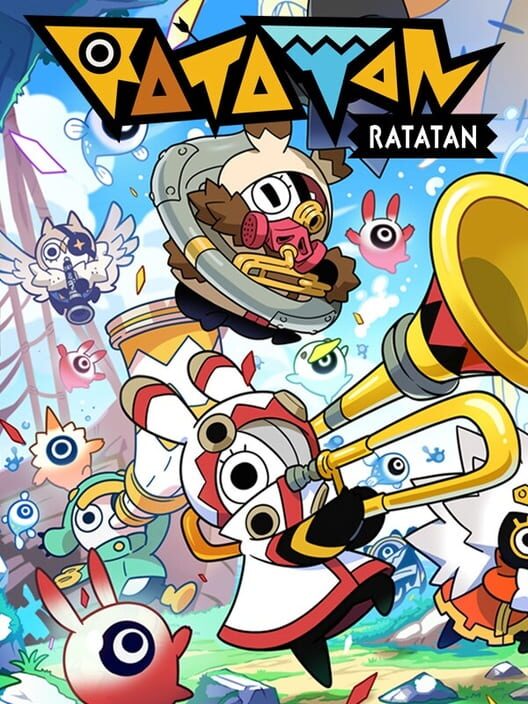
Ratatan
Ratatan Beginner Guide: Learn Rhythm Commands and Lead Your Cobuns
Learn how Ratatan's rhythm commands work, how to position your leader, and how to give Cobuns reliable orders in hectic side-scrolling battles.
Price Comparison
This Ratatan beginner guide covers the most important lesson for new players: you are not simply pressing attacks to win fights. You move your Ratatan around the battlefield while issuing rhythm sequences that tell your Cobuns what to do. Learn the beat, make dependable commands, and keep your leader in a useful position before worrying about perfect inputs. That foundation makes Ratatan's busy side-scrolling battles far easier to read.
Ratatan is a rhythm roguelike action game built around commanding Cobuns in time with its music. The official store descriptions describe battles with more than 100 characters on screen, so early difficulty often comes from trying to process every enemy at once. Instead, focus first on the relationship between your position, the command you choose, and the beat that delivers it.
Understand Your Job as the Squad Leader
Your Ratatan can move freely, while Cobuns receive orders through timed rhythm sequences. This distinction is central to the game. Your character's location affects where danger is, where the squad gathers, and whether an order makes tactical sense. The Cobuns carry out the command; your job is to put the group in a position where that command will work.
Do not treat movement as downtime between musical inputs. Move to create space before an enemy attack reaches the group, avoid standing where a forward push will expose the squad, and be ready to pull the formation back when the screen becomes crowded. A well-timed order is still weaker when it is issued from a poor position.
Watch the Whole Formation, Not Just Your Ratatan
It is easy to stare at the leader or at the command prompts. Make a habit of checking where the Cobuns are relative to enemies. If they are spread out, overextended, or stuck in a dangerous area, regain control of the formation before committing to another aggressive sequence. Reliable formation control gives you time to recognize enemy pressure and select the next order deliberately.
The exact visual chaos changes from fight to fight, but the priority remains consistent: keep the squad where it can act safely, then use the rhythm system to turn that position into offense or defense.
Learn the Beat Before Chasing Perfect Timing
Ratatan's commands must be entered in time with the music. The official Steam and PlayStation descriptions emphasize that the player uses rhythm sequences to order Cobuns, so timing is not an optional scoring layer. It is how your intended action reaches the squad.
At the beginning, aim for consistency rather than perfection. Listen for the repeating pulse, watch the timing feedback, and give yourself enough attention to finish a full command cleanly. Trying to react at the last possible moment can turn a simple defensive response into a missed sequence. When the fight becomes stressful, use the musical pulse as the stable point rather than speeding up with the action on screen.
Practice With One Purpose at a Time
Early practice is more effective when each battle has a small goal. Spend a few encounters concentrating on entering a single familiar command on beat. In the next encounters, focus on moving your Ratatan without losing the pulse. Then practice changing from a movement or regrouping order into an attack order without rushing.
This approach matters because Ratatan asks you to make two decisions at once: what the squad needs and when the sequence must be played. Separating those skills during easier moments helps them come together during harder battles.
Use Commands as Answers to Battlefield Problems
Every command should solve an immediate problem. Before entering a sequence, take a quick look at the screen and ask what the squad needs most. Is the group out of position? Is an enemy about to hit? Is there a safe opening to pressure the opponent? Choosing the order first keeps you from pressing familiar inputs automatically.
- When the squad is scattered: prioritize bringing it back under control and repositioning the leader.
- When the group is threatened: choose a defensive or evasive response early enough to complete the rhythm sequence.
- When enemies are exposed: use the opening to send the Cobuns forward and maintain pressure.
- When the battlefield changes: reassess instead of repeating the previous command out of habit.
The key beginner habit is to avoid treating every moment as an attack opportunity. Retreating, regrouping, or defending can be the action that preserves the squad and creates a better attacking window on the next phrase.
Position First, Then Commit to an Attack
Because your Ratatan moves independently, aggressive commands demand setup. Before ordering an attack, consider whether the Cobuns can safely reach the target and whether your leader has room to move if the enemy pushes back. A command that advances the squad into an obvious threat may create more problems than it solves.
Try to create a clean lane for the group. Move out of immediate danger, allow the Cobuns to collect around a sensible position, and then commit to an offensive sequence when the enemy is within reach. This is particularly useful in larger melees, where crowding can obscure attacks and make late reactions difficult.
Do Not Let the Screen Force You to Rush
Ratatan intentionally combines musical timing with hectic side-scrolling action. The number of characters in a battle can make the action appear more urgent than it is. Resist the urge to mash inputs when several effects overlap. A command entered with control is more valuable than a faster sequence that fails or sends the squad into the wrong situation.
If you lose track of the formation, simplify the next decision. Recover the group, reestablish your position, and return to attack once you can read the screen again.
Build a Reliable Early-Fight Routine
A simple routine reduces the number of decisions you must make at the start of each encounter. First, identify where your Ratatan and Cobuns are entering from. Second, listen for the current rhythm before trying a complex response. Third, use a command that establishes control of the formation. Finally, advance into offense only after you know where the immediate threat is.
This is not a rigid script. Some enemies will demand quicker defense, while others give you more room to set up. The value of the routine is that it stops the opening seconds from becoming random button presses. Once you can begin fights calmly, you can spend more attention on enemy behavior and the opportunities created by your squad.
Play Online Co-op With Clear Roles
Steam lists online co-op for up to four players, and Ratatan's official store descriptions position cooperative play as part of its large-scale battles. Co-op can add more damage and more activity to the screen, but it does not remove the need for clean timing and positioning.
In a group, avoid assuming another player will solve every threat. Watch your own Cobuns, keep your Ratatan out of avoidable danger, and make commands that fit the visible situation. A useful co-op approach is for players to avoid clustering their leaders in the same unsafe space. When everyone keeps enough room to see the fight and recover their own formation, the battlefield is easier to manage.
Before a session, make sure everyone understands that rhythm accuracy still matters. Co-op works best when players make intentional decisions rather than creating a wall of overlapping, poorly timed commands.
What to Focus on After the Tutorial
After the tutorial, prioritize three skills: recognizing the beat without panicking, moving your Ratatan with purpose, and choosing commands based on the squad's current position. These are the parts of Ratatan that apply across fights, regardless of how many enemies are on screen.
Do not measure early progress only by how quickly enemies fall. Measure it by whether you can keep the Cobuns together, complete commands when you intend to, and reset the fight when the formation gets messy. Once those habits become automatic, the action becomes less overwhelming and Ratatan's rhythm-led tactical play becomes much more satisfying.
Sources
FAQ
Frequently Asked Questions
What do you do in Ratatan?
You move a Ratatan freely and use timed rhythm sequences to command a group of Cobuns during side-scrolling action battles.
Why do my commands fail in Ratatan?
Commands depend on rhythm timing, so rushed or off-beat inputs may fail to deliver the order you intended. Focus on the musical pulse before attempting faster reactions.
Should beginners prioritize attacking in Ratatan?
No. Regrouping, repositioning, and defensive responses are often more important than attacking when the Cobuns are scattered or exposed.
Can you play Ratatan online with friends?
Steam lists Ratatan as supporting online co-op for up to four players. Platform-specific multiplayer features can vary, so check the relevant store page before buying.
How can I improve quickly in Ratatan?
Practice one skill at a time: keep the beat, move the Ratatan safely, then choose commands that match the squad's current position and the enemy threat.
Platforms
PC (Microsoft Windows), PlayStation 5, Xbox Series X|S
Genres
Music, Role-playing (RPG), Strategy, Adventure, Indie
Themes
Action, Fantasy
Game Modes
Single player, Multiplayer, Co-operative
Player Perspectives
Side view
Game Engines
Unity
Companies
Ratata Arts, Game Source Entertainment