
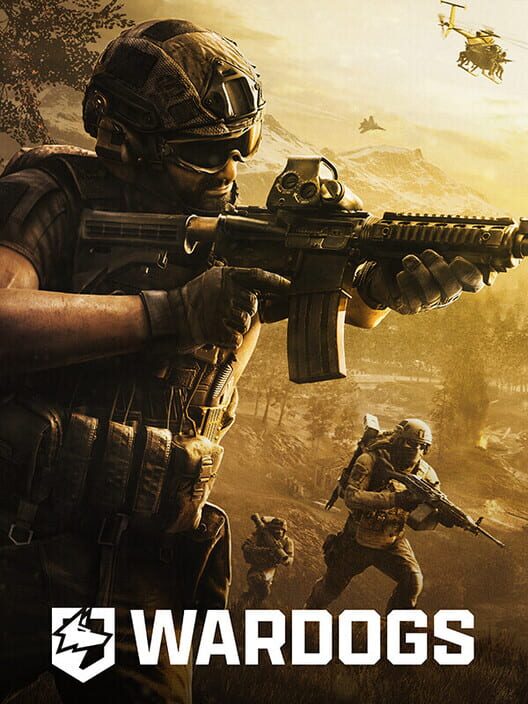
Wardogs
Wardogs Game Mechanics Guide: Objectives, Cash, and Teamplay
Learn how Wardogs matches work, from three-team Control Zones and persistent cash to loadouts, logistics, vehicles, destruction, and proximity voice chat.
Price Comparison
Wardogs is a large-scale tactical multiplayer FPS built around a simple match objective with unusually broad ways to contribute: three teams compete to control a randomized Control Zone, and the first team to 100 points wins. The important part is that fighting is only one route to success. Revives, transport, logistics, building, objective presence, vehicles, and communication can all matter because Wardogs rewards team-oriented actions with cash and XP. It launched in Steam Early Access on September 10, 2026, so its balance and feature set may change during development.
How a Wardogs match works
The core Wardogs mode is inspired by King of the Hill. Up to 100 players are divided across three teams and fight over a Control Zone that appears in a randomized location within the larger battlefield. The team with the most players inside that zone earns points. Reach 100 points before either rival team and your team wins the match.
That three-team structure changes the usual multiplayer-shooter logic. There is no single enemy front to focus on: a fight against one team can give the third team room to capture the zone. A squad that commits everyone to a distant battle may win that skirmish but still lose score while the other two sides contest the objective. Before taking a long flank or investing in a vehicle push, check whether it helps your team hold, enter, or disrupt the current Control Zone.
Control Zones are dynamic rather than fixed map objectives. That means a defensible position can become less valuable when the active zone changes. Treat established bases, sniper nests, and vehicle routes as tools for the current phase of a match, not permanent solutions. Good teams should be prepared to move supplies and players when the objective demands it.
Cash is the central progression mechanic
Wardogs uses cash alongside XP. According to the Steam description, players begin with $10,000 and buy a custom loadout on each life from available weapons, gear, utility, and vehicles. Cash is earned through combat, support actions, transportation, reviving teammates, and playing the objective.
The major strategic wrinkle is persistence: cash carries across matches. In practical terms, a costly choice is not only a decision for the current life. Spending heavily on gear or a vehicle can create a powerful opportunity, but it also reduces the money available for later loadouts. Conversely, a player who supports the team consistently can build resources without relying entirely on eliminations.
Spend for the job you are doing
There is no verified fixed class system described on the official store page, so Wardogs is best approached through roles rather than locked classes. Buy equipment that solves the immediate problem. If your team needs bodies in the objective, prioritize a loadout you can afford to replace. If the team lacks transport, supplies, or a way to challenge an entrenched position, spending more may be justified because it can improve the whole team’s ability to contest the zone.
Avoid treating expensive equipment as something that must be protected at all costs. A vehicle or high-cost loadout is valuable when it creates score pressure, enables teammates, or removes a major obstacle. It is less valuable when it remains far from the objective simply because its operator does not want to risk losing it.
Use the Hot Zone deliberately
Wardogs also includes a Hot Zone that can offer double cash rewards. This creates a risk-and-reward decision: pursuing it can accelerate your earnings, but it can also draw players away from the main Control Zone or into a high-traffic combat area. It is most useful when the team can exploit the reward without abandoning the match objective. A coordinated squad may be able to take the bonus while still maintaining enough presence at the Control Zone; an isolated player may instead become an easy target with little strategic payoff.
Objective presence beats isolated combat
Because score comes from having the most players in the Control Zone, presence is a resource. Eliminating enemies near the objective is useful because it clears space for teammates, but kills far from the zone do not automatically advance the score. The same is true of long-range fire: it can be decisive when it denies approaches or protects a push, yet it has limited value if it does not help the team take or hold the active area.
When your team is behind, prioritize actions that change zone control quickly. Transport teammates into the fight, revive players who are already positioned well, suppress enemy routes, or bring equipment that can break a fortified approach. When your team leads, the priority shifts toward maintaining enough zone presence while preventing both opposing teams from collapsing on the objective at once.
Vehicles, logistics, and fortifications
Wardogs combines infantry combat with vehicles, support systems, building, and destructible environments. The official Steam page gives examples including helicopters for ferrying supplies, tanks, artillery-capable armor, and player-built forward operating bases. These systems are not separate side activities: they are intended to feed back into the struggle for the Control Zone.
Logistics creates momentum
Transport is a direct way to move friendly players toward the objective, and the game specifically lists transporting friendlies as a cash-rewarded team action. This makes a reliable driver or pilot more than a passive support player. A well-timed lift can reinforce a contested zone before a rival team captures enough points, while a poorly timed trip can leave valuable transport unavailable when the frontline shifts.
Players handling logistics should watch the objective rather than operate on a fixed route. The best delivery point changes with the zone, enemy pressure, and the safety of approach roads or airspace. Bring teammates close enough to contribute, but do not repeatedly deliver them into an exposed point with no plan for cover or follow-up.
Build for a tactical purpose
Building and fortification systems let teams reinforce useful positions and create forward operating bases. Fortifications are strongest when they protect a route into the active Control Zone, provide cover for a revive chain, or give a team a staging point for a push. They are weaker when built simply because a location looks defensible but is no longer relevant to the randomized objective.
Destruction is the counterweight. Wardogs presents destructible buildings and terrain as part of its all-out-warfare sandbox, meaning cover and defensive positions cannot always be assumed to be permanent. Expect static defenses to attract attention. Build with alternate exits, cover behind the first line, and a plan to relocate when armor or explosives change the terrain.
Communication is a gameplay tool
Wardogs supports online multiplayer with proximity voice chat. That matters because the game’s large, three-team battlefield can produce short-lived opportunities that are hard to communicate through map awareness alone: an enemy vehicle exposed on a road, a weakly defended entrance to the zone, or a nearby group that needs transport or revives.
Use proximity chat for short, actionable calls. State the location, the immediate threat or opportunity, and the needed response. For example, call for a ride to the objective, identify a hostile armored vehicle blocking an approach, or ask nearby teammates to help secure a capture area. Lengthy conversation can be less useful than a clear warning when the Control Zone is changing hands.
What new players should prioritize
- Learn the score condition first. The first team to 100 points wins, so regularly check whether your current action affects Control Zone control.
- Start with affordable, repeatable loadouts. Persistent cash makes reckless spending a longer-term decision, especially while learning maps and equipment.
- Earn through teamplay. Revives, transport, logistics, and objective play are valid ways to gain cash and XP alongside combat.
- Move when the zone moves. A fortified area or successful flank loses value when it is no longer connected to the active objective.
- Use vehicles with an objective in mind. Transport, fire support, and demolition should help your team enter, hold, or deny the Control Zone.
- Expect the game to evolve. Wardogs is in Early Access, and the developer says it plans to expand content and continue improving balance, performance, and stability.
The key idea: make every life useful
The most effective Wardogs players will not necessarily be those chasing the most eliminations. The game’s cash system and objective design reward players who identify what their team needs at a given moment, whether that is an extra defender inside the Control Zone, a revive, a transport run, a forward base, or destructive firepower against an entrenched enemy. Make spending decisions around that need, keep the score condition in view, and treat the shifting Control Zone as the center of the match.
For the current official description, Early Access details, and PC requirements, see the Wardogs Steam page. Bulkhead also describes Wardogs as a large-scale sandbox FPS combining tactical gunplay, vehicles, building, and destruction on its official game page.
Sources
FAQ
Frequently Asked Questions
How do you win a Wardogs match?
Three teams compete for a randomized Control Zone. The team with the most players in the zone earns points, and the first team to 100 points wins.
Does cash persist between matches in Wardogs?
Yes. Wardogs states that cash persists from match to match, so spending on loadouts, equipment, and vehicles has longer-term consequences.
How do players earn cash in Wardogs?
Players earn cash through combat and teamplay actions including reviving teammates, transporting friendlies, logistics, and controlling the objective.
Does Wardogs have vehicles and building?
Yes. The official description lists vehicles, logistics, building, fortifications, and destructible environments as part of the game.
Is Wardogs a Battle Royale or extraction shooter?
No. Wardogs is presented as a tactical all-out-warfare FPS centered on three-team Control Zone matches.
Platforms
PC (Microsoft Windows), PlayStation 5, Xbox Series X|S
Genres
Shooter, Simulator, Tactical
Themes
Action, Sandbox, Warfare
Game Modes
Multiplayer
Player Perspectives
First person
Game Engines
Unreal Engine 5
Companies
Bulkhead, Team17
Release Dates
Media
User Reviews
Similar Games

Tom Clancy's Splinter Cell: Conviction
Tom Clancy's Rainbow Six 3: Black Arrow
BattleBit Remastered
Aimlabs

Plants vs. Zombies: Battle for Neighborville
Gunsmith Simulator

Sniper Ghost Warrior Contracts 2
Modern Warships

Tom Clancy's The Division: Heartland
Black One Blood Brothers
Call of Duty: Vanguard
Easy Red 2

Arma Reforger
Helldivers 2