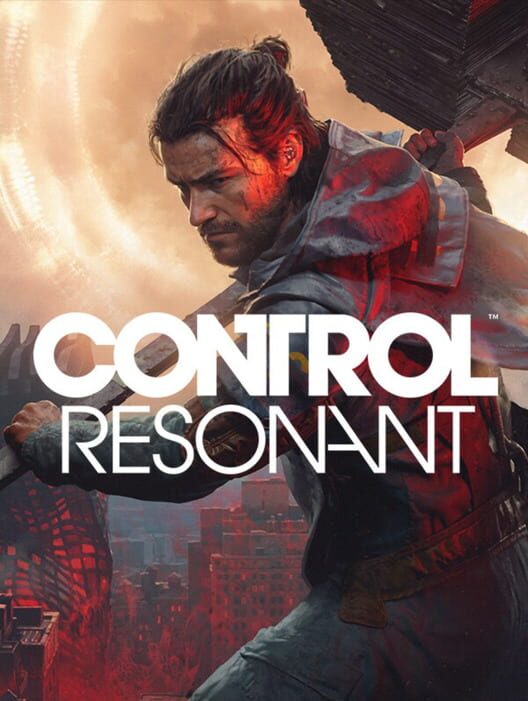
Control Resonant
Control Resonant Combat and Progression Guide
A guide to the confirmed combat, Aberrant weapon forms, paranormal abilities, exploration, progression, and accessibility mechanics in Control Resonant.
Price Comparison
Control Resonant combat and progression center on Dylan Faden's paranormal abilities, a shapeshifting melee weapon called the Aberrant, elemental powers, and environmental tactics. Remedy describes the game as an action-adventure RPG set across a warped Manhattan, where gravity anomalies affect both exploration and combat. The confirmed details point to a close-range, ability-driven system with character-growth choices, rather than a direct repeat of Jesse Faden's playstyle in the original Control.
Because Remedy has not published a complete move list, skill tree, or detailed stat breakdown, this guide separates confirmed mechanics from reasonable preparation. It explains what players can expect from the announced systems without treating unannounced features as fact.
Dylan Faden Is the Playable Character
Control Resonant puts players in control of Dylan Faden, Jesse Faden's brother and a central figure in the first Control. The game follows Dylan after years of confinement by the Federal Bureau of Control, as a paranatural crisis spreads beyond the Oldest House and into Manhattan.
This matters mechanically as well as narratively. Remedy has presented Dylan as a character who must learn to control and develop his powers over the course of the game. That framing supports a progression structure built around growth: players will begin with a version of Dylan that is still discovering his potential, then shape how his abilities develop as new dangers emerge.
The official store descriptions confirm that Dylan is the game's playable lead. Jesse remains important to the story, but she is not described as a second playable character. Players looking for a co-op campaign or character-switching system should not assume either feature is included; the listed store features identify Control Resonant as a single-player game.
The Aberrant Is Dylan's Core Combat Weapon
The most clearly defined combat mechanic is the Aberrant, Dylan's shapeshifting melee weapon. Rather than relying on one fixed weapon type, Dylan can use the Aberrant in multiple forms. Remedy has specifically confirmed a heavy two-handed hammer form and fast dual-wielded blades.
The hammer appears designed for forceful, high-impact attacks. In practical terms, it should suit situations where committing to a slower but more powerful strike is worth the risk, such as pressuring durable enemies or creating space in a crowded encounter. The dual blades, by contrast, are presented as a quicker and more precise form. They should be the more natural choice when mobility, rapid attacks, or fast target changes matter.
The key idea is transition. Remedy says the weapon can morph on demand and that players can flow from hammer strikes into dual-blade attacks. That suggests weapon form changes are meant to be part of moment-to-moment combat decisions, not a choice made only in a loadout screen. Watch for enemy behavior, distance, and arena layout, then choose the form that best answers the immediate threat.
How to Think About Weapon Switching
Until the full control scheme and weapon-form roster are confirmed, the safest approach is to view the Aberrant as a flexible combat tool rather than two separate weapons. A heavy form may give Dylan a way to contest enemies up close, while a faster form may help maintain momentum when threats are mobile or attacks need to be chained together.
Do not assume that the hammer and blades are the only forms. Remedy says the Aberrant has many forms and has indicated that more forms have not yet been shown. It has not publicly detailed their names, unlock requirements, damage types, or exact tactical roles, so those details should remain open until launch information or in-game documentation confirms them.
Elemental Abilities and Environmental Combat
The Aberrant is not Dylan's only combat option. Control Resonant is also confirmed to include elemental abilities and environmental combat. Remedy's description places these systems alongside weapon transformations when outlining how players will fight evolving threats across Manhattan.
Environmental combat means the space around Dylan is intended to matter. The official material does not define every possible interaction, so it would be inaccurate to promise destructible cover, thrown objects, traps, or specific physics powers. What is confirmed is that the environment is a meaningful component of encounters, alongside melee weapon forms and elemental abilities.
For players, the most useful early combat habit is likely to be situational awareness. Before committing to an attack, identify hazards, elevation changes, available space, and the positions of multiple enemies. In a game where the environment is explicitly part of the combat toolkit, tunnel vision on one target can make an encounter harder than necessary.
Gravity Anomalies Change the Battlefield
Manhattan's paranormal distortion is more than scenery. Remedy confirms that players will encounter gravity anomalies which affect vertical and horizontal space. These anomalies are said to add dimensions to puzzles and create new tactical decisions in combat.
That wording suggests conventional assumptions about height and direction may not always apply. An opponent's position above, below, or across an arena may become more relevant when gravity is altered. Navigation routes can also overlap with combat opportunities, particularly when a changed surface or distorted pathway offers a safer angle of approach.
The exact rules of these anomalies have not been fully explained. There is no confirmed information yet on whether Dylan can activate them, whether they are limited to specific locations, or how often they appear. Players should therefore expect gravity to be an authored environmental mechanic, while waiting for the game to establish its specific limits.
Progression Lets You Shape Dylan's Powers
Control Resonant has a confirmed deep progression system. Remedy says players can make choices that shape how Dylan's abilities manifest and grow, allowing him to adapt to emerging dangers. This is the strongest indication that the game will give players meaningful control over character development rather than simply awarding a fixed ability sequence.
However, the official descriptions do not identify individual skill branches, currencies, rarity systems, gear slots, or respec options. It is also not confirmed whether progression choices are permanent, whether they affect dialogue or story outcomes, or whether every build can access every power. Avoid guides that claim exact builds or optimal skill paths before the game itself provides those details.
Based on the announced systems, a practical first-playthrough approach is to invest according to the combat patterns you actually use. Players who prefer deliberate close-range pressure may find upgrades supporting heavy Aberrant play more valuable. Players who favor speed and constant repositioning may instead prioritize abilities or options that complement the dual blades. The important point is not to copy a theoretical build before you know how the final systems feel in play.
Exploration Is Built Around Multiple Manhattan Zones
Control Resonant takes place in multiple areas of a ravaged Manhattan rather than remaining solely within the Oldest House. Remedy describes these as expansive zones shaped by the Hiss, the Mold, and other paranatural threats. The game is presented as an expansive world, but the available official information does not define whether every zone is fully open, how fast travel works, or how optional activities are structured.
Exploration and combat appear closely connected because gravity anomalies affect both puzzles and tactical decisions. When entering a new area, it will be useful to look beyond the direct route forward. A distorted room or altered street may contain a puzzle solution, a combat advantage, or simply a different way through the space.
The Hiss and Mold return as confirmed threats, joined by other paranormal dangers. Remedy has not published a comprehensive enemy guide, so there is no verified breakdown of factions, bosses, resistances, or elemental weaknesses. Treat new enemies as problems to observe first: identify their range, movement, and attack timing before deciding whether a heavy weapon form, quick blades, abilities, or a repositioning route is the best answer.
Difficulty and Accessibility Options
The PlayStation Store listing confirms advanced adjustable difficulty options and individual gameplay assists. This is useful for players who want to focus on the story, experiment with Dylan's combat tools, or tune encounters to a preferred challenge level. The listing also confirms that the game can be paused during gameplay and cinematics when playing offline.
Additional confirmed accessibility features include fully customizable controller remapping, adjustable stick sensitivity, stick-inversion options, separate audio volume controls, mono audio, basic subtitles, and large subtitles. The PlayStation listing states that subtitles cover the main story and main characters only, so players who need subtitles for all ambient dialogue should not assume that support is available.
What Is Not Yet Confirmed
Control Resonant's official listings establish its broad combat and progression direction, but they do not yet provide a full systems manual. Specific information about the number of Aberrant forms, the exact ability list, skill-tree categories, enemy resistances, crafting, loot, New Game Plus, difficulty presets, and controller layouts has not been verified in the available primary sources.
That makes the central takeaway straightforward: expect a single-player action RPG where Dylan alternates between a transforming melee weapon, elemental abilities, and environmental tactics while developing powers through player-influenced progression. The details that will determine the strongest builds and most efficient combat strategies remain for the game to reveal.
Sources
FAQ
Frequently Asked Questions
What weapon does Dylan use in Control Resonant?
Dylan uses the Aberrant, a shapeshifting melee weapon. Confirmed forms include a two-handed hammer and dual-wielded blades.
Does Control Resonant have character progression?
Yes. Remedy confirms a deep progression system in which players make choices that shape how Dylan's abilities manifest and grow.
Are elemental powers in Control Resonant?
Yes. The official game descriptions confirm elemental abilities as part of combat, alongside the Aberrant and environmental tactics.
How do gravity anomalies affect gameplay in Control Resonant?
Gravity anomalies distort vertical and horizontal space, adding puzzle elements and new tactical considerations to combat.
Is Control Resonant single-player only?
The official Steam and PlayStation Store listings identify Control Resonant as a one-player or single-player game. No co-op mode has been confirmed.
Platforms
PC (Microsoft Windows), Mac, PlayStation 5, Xbox Series X|S
Genres
Role-playing (RPG), Hack and slash/Beat 'em up, Adventure
Themes
Action, Science fiction
Game Modes
Single player
Player Perspectives
Third person
Game Engines
Northlight Engine
Companies
Remedy Entertainment