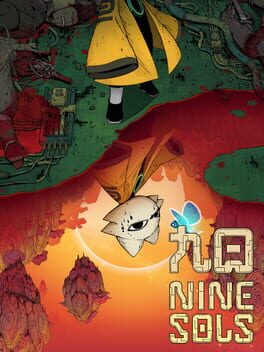
Echo Weaver
Echo Weaver Time Loop Mechanics Guide: How Progression Works
Learn how Echo Weaver turns its time loop into a resource, why knowledge replaces conventional upgrades, and how to approach routes, secrets, and resets.
Price Comparison
Echo Weaver's time loop is both your main limitation and your main tool. Rather than centering progression on a conventional upgrade tree, this knowledge-based Metroidvania asks you to learn how its ruined world works, then use that knowledge to take better routes, find shortcuts, and make more effective use of each loop. The core idea is simple: time can be extended through pickups, but it is also spent on actions including healing, trading, and opening new routes. Progress comes from understanding when those costs are worthwhile and from discovering information that changes what you can accomplish on later attempts.
That structure means a reset is not necessarily lost progress. A loop can reveal a path, character clue, anomaly, hazard pattern, or use for the protagonist's glaive that makes the next run more productive. Echo Weaver describes this approach as a “metroidbrainia”: a game where what the player has learned matters more than what has been permanently unlocked.
Time Is a Consumable Resource
In Echo Weaver, the active loop is a resource with competing demands. The official game description states that pickups can extend the loop, while the available time can be drawn on to heal, trade, unlock routes, and perform other actions. This makes moment-to-moment decisions more consequential than simply racing toward the next objective.
Do not treat every time-extending pickup as an automatic detour, and do not spend time simply because an option is available. The useful question is whether an action creates a lasting informational advantage. Paying time to open a route may be worthwhile if it exposes a shortcut that improves every following loop. Healing may be necessary to survive a dangerous segment, but using time to recover from avoidable mistakes can leave too little for a key interaction later in the route.
Think in Terms of Route Value
A productive loop does not have to include every possible activity. Before leaving a familiar area, identify the most valuable outcome available to you: reach an unexplored junction, test a suspected glaive interaction, speak with a survivor after learning new context, or check whether an observed event changes at a different point in the loop. Build your route around that goal.
If a route costs too much time for too little new information, abandon or shorten it on the next attempt. The game explicitly emphasizes rhythm and routing over raw reflexes, so improving a run should often mean reducing unnecessary movement, anticipating hazards, and choosing a better order for stops rather than attempting to force a difficult sequence through repeated combat or platforming errors.
Knowledge Replaces Traditional Upgrades
Echo Weaver's defining progression system is that its meaningful “upgrades” are secrets. The developer's store description says there are no upgrades in the usual sense; progress is based on what you learn rather than on a list of items acquired. It also says that every power is already available to the player, even if its purpose is not initially understood.
This changes how you should read obstacles. In many Metroidvanias, a blocked route clearly signals that you need a future ability. In Echo Weaver, a barrier may instead signal that you need a different piece of information: a more creative application of an ability you already possess, knowledge of an alternate path, the timing of an event, or an understanding of how a time-altering anomaly behaves.
When You Are Stuck, Change the Question
When progress stops, avoid assuming that the answer is hidden in a conventional collectible. Start by reviewing what the world has already shown you. Did you pass an unusual object, locked structure, NPC, hazard, or anomaly whose purpose was unclear? Did a character mention a location or event you have not revisited? Did a route appear impractical only because you approached it too late in the loop?
The most useful experiments are specific. Test one interaction, one route order, or one timing hypothesis per loop where possible. A focused attempt is easier to evaluate than a long run in which several variables changed at once. Even a failed experiment can narrow the possibilities and make the next loop more efficient.
Use the Glaive as an Exploration Tool
The protagonist carries an alien glaive that the official description calls a reality-bending power. Echo Weaver frames the infinite loop as a place to practice with it: players are encouraged to decipher its fractured essence, find applications that bypass obstacles, and use discoveries from earlier loops to uncover shortcuts.
That language is important because it suggests the glaive should not be viewed only as a combat weapon. When you encounter a traversal problem, inspect the environment for ways the glaive's existing powers might interact with it. A new use may come from combining an ability with the layout, a hazard, an anomaly, or a piece of information gathered elsewhere.
Give yourself room to test those ideas. Enter an unfamiliar segment with enough remaining time to observe its rules and retreat or reset without pressure. Once you understand the interaction, incorporate it into a later route that has a larger goal. Discovery loops and execution loops can serve different purposes.
Learn the World Through Repetition
Echo Weaver is set in the Gilded Ruin, a collapsed society whose remaining inhabitants and locations are tied to the mystery of the time loop. Survivors are not just background characters. The official description indicates that understanding the people trapped in the loop is part of carving a path to freedom and exposing the conspiracy behind the setting's collapse.
Revisit people after major discoveries, especially when dialogue or environmental details have pointed toward a new lead. A conversation can be valuable even if it does not immediately award an item or open a passage, because it may establish the context needed to interpret another location or character later.
Memorize Repeatable Hazards
Because each loop repeats, hazards and traversal sections become predictable. Use that predictability. On an early pass, prioritize observation: note safe footing, enemy placement, moving obstacles, and whether an encounter is worth engaging. On later passes, convert those observations into a cleaner route.
The objective is not perfection for its own sake. A reliable route preserves time and attention for new discoveries. If you can cross a known room consistently without spending health or loop time, you have effectively made every future attempt stronger, even though the game has not given you a numerical stat increase.
A Practical Loop Planning Method
- Set one primary goal. Choose a destination, clue, route test, or interaction before committing to a run.
- Use familiar paths efficiently. Favor routes whose hazards and travel time you understand unless exploration itself is the goal.
- Protect time for the unknown. Do not exhaust the loop on routine travel and optional mistakes before reaching the area you need to investigate.
- Spend time for durable value. Prioritize healing, trades, and route unlocks when they enable an important discovery or a better future route.
- Record the result mentally or in notes. Identify exactly what changed, what failed, and what you will test differently on the next loop.
External notes can be particularly useful in a game built around knowledge. Keep them lightweight: named locations, possible shortcuts, unexplained symbols, NPC leads, and observations about timing are more useful than attempting to document every room. The goal is to preserve discoveries that your character may not carry as a conventional inventory item.
What a Successful Reset Looks Like
A successful reset is one that leaves you with actionable understanding. You may have found a shortcut, learned a safer sequence through a dangerous area, identified an inefficient detour, or gained context for a survivor's request. None of those outcomes needs to look like a permanent upgrade screen to matter.
Echo Weaver rewards players who treat failure as reconnaissance. The loop is designed to be refined: gather information, improve the route, spend time with intent, and return with a clearer plan. Once that mindset clicks, the central challenge becomes less about escaping the reset immediately and more about learning enough to create the one route that can finally break it.
Sources
FAQ
Frequently Asked Questions
How does the time loop work in Echo Weaver?
The loop is a consumable resource. Pickups can extend it, while available time can be spent on actions such as healing, trading, and opening routes.
Does Echo Weaver have conventional upgrades?
Its progression is built around knowledge rather than a standard upgrade system. The game describes secrets and player understanding as the real form of advancement.
What should I do when I get stuck in Echo Weaver?
Reconsider previously seen obstacles, anomalies, characters, and routes. A solution may depend on timing, a shortcut, new context, or a creative use of a power you already have.
What is the glaive used for in Echo Weaver?
The glaive has reality-bending powers and is used for more than direct confrontation. Learning its applications can help bypass obstacles and reveal shortcuts.
Are resets in Echo Weaver lost progress?
Not necessarily. A loop is valuable when it reveals information that improves future routes, such as hazard patterns, alternate paths, character leads, or new uses for existing powers.
Platforms
PC (Microsoft Windows), Mac, PlayStation 5, Xbox Series X|S
Genres
Platform, Puzzle, Adventure, Indie
Themes
Action, Science fiction
Game Modes
Single player
Player Perspectives
Side view
Game Engines
Unity
Companies
Moonlight Kids, Akupara Games